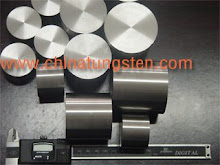
What is tungsten iridium stream mouth?
The tungsten iridium stream mouth is as a special tungsten heavy alloy with other refractory metals. It mainly uses in rare-earth metal smelting, the induction furnace heating element, the quartz glass smelting and so on, makes the high temperature vessel. In the glass and the ceramic industry, the tungsten class mouth is a ceramic micro production very essential part. The tungsten proportion is big, degree of hardness is big, the heat conduction electric conductivity good, heat-resisting, wear-resisting, anti-corrosive, has the low expansibility and the size stability under the high temperature. The tungsten melting point is highest when all metals (reaches as high as 3380 degrees Celsius), the steam tension to be lowest, the tensile strength is highest (1650°C), and its antiseptic property is good, the majority inorganic acid are very small to its corrosion. Therefore it is ideal to manufacture heavy alloy. But the tungsten and the iridium make the alloy, its abrasion resistance, degree of hardness, the intensity, the heatproof quality obtained the further promotion, thus has guaranteed the product uniformity well. Is precisely these precious performance, causes it to become now in the high-tech crystal glass industry the indispensable equipment component.
Some photos of tungsten alloy products from Chinatungsten, please visit http://www.tungsten-alloy.com/tungsten-iridium-stream-mouth.htm.
Felicity
Wednesday, 28 April 2010


Tungsten Alloy for Military Defense
The function of ejection standoff ammunition is to make a barrage out of the tungsten alloy projectiles, but not to markedly increase their kinetic energy. New technology in the area of thin-walled guided missiles allows bullets weighing 700 grams to hold 500 grams of effective load. Nitrified fibre firing ammunition and a high intensity carbon steel ammunition cartridge endows the bullets with 1050metre/sec initial velocity.
Some more pictures about tungsten alloy for military defense, please visit http://www.tungsten-alloy.com/military-defense-02.htm.
Felicity
Some more pictures about tungsten alloy for military defense, please visit http://www.tungsten-alloy.com/military-defense-02.htm.
Felicity
Tungsten Alloy Mobile Phone Vibrator
What is vibrator for mobile phone?
When mobile phone vibrates, there is an eccentric motion, which is caused by eccentric motor with vibrating components. As the center of the gravity is eccentric, and is not in the rotor of motor, then the mobile phone vibrate. In this case, machinery component with good properties of wear resistant and high specific gravity is required.
Application for tungsten heavy alloy in vibrator
tungsten heavy alloyis excellent material for making this component. Since the density of tungsten alloy is so high and the maximum density should be 18.6g/cm3. It is popular for the component needs great heaviness but small capacity, for example: mobile phone vibration, the vibrating parts of and clock, etc.
Mobile phone bobs and clock vibration parts are one of our leading products. Compared with other materials, tungsten alloy vibrators bear the advantages of accurate weight, and non-magnetism. In particular, since a motorized weight usually produces the vibrations, lighter-weight phones may have weaker vibrating mechanisms.
Various types of vibrators or bobs made from WHA are available. Please contact our sales team at sales@chinatungsten.com for more details.
More details, please visit http://www.tungsten-alloy.com/mobile-phone-vibrator.htm.
Felicity
When mobile phone vibrates, there is an eccentric motion, which is caused by eccentric motor with vibrating components. As the center of the gravity is eccentric, and is not in the rotor of motor, then the mobile phone vibrate. In this case, machinery component with good properties of wear resistant and high specific gravity is required.
Application for tungsten heavy alloy in vibrator
tungsten heavy alloyis excellent material for making this component. Since the density of tungsten alloy is so high and the maximum density should be 18.6g/cm3. It is popular for the component needs great heaviness but small capacity, for example: mobile phone vibration, the vibrating parts of and clock, etc.
Mobile phone bobs and clock vibration parts are one of our leading products. Compared with other materials, tungsten alloy vibrators bear the advantages of accurate weight, and non-magnetism. In particular, since a motorized weight usually produces the vibrations, lighter-weight phones may have weaker vibrating mechanisms.
Various types of vibrators or bobs made from WHA are available. Please contact our sales team at sales@chinatungsten.com for more details.
More details, please visit http://www.tungsten-alloy.com/mobile-phone-vibrator.htm.
Felicity
Tungsten Alloy Golf Screw
What is golf screw?
We can offer golf club head with a sole component entirely composed of a tungsten alloy material.
We adopt the method of Metal Injection Molding, making an entire golf club head composed of a metal injection molded material having a tungsten alloy composition.
Why Use Tungsten Alloy for Golf Screw?
Numerous techniques have been used for weighting golf club heads in order to gain better performance. In persimmon wood club heads, weights were attached to the sole in order to lower the center of gravity. The first metal woods had sufficient weight, however, the weight distribution deterred slightly from performance. The refinement of hollow metal woods with weighting on the sole improved upon the performance of these clubs. We use a tungsten screw in the sole of each titanium club head body to vary the weight of the golf club head.
Advantages of tungsten alloy golf head weight part by MIM method of Chinatungsten Online:
1、Density-Designed according to customers needs (10~18.6g/cc)
2、High strength、Well-toughness、Hardness of fit、Excellent machinability
3、Not rust
4、Dense material without holes
5、Color consistency
Typical Properties of Tungsten Heavy Alloy Golf Head Parts
W %
Density
(±0.1)
g/cc
Tensie strength
MPa
Elongation
%
Hardness
Density
P/T %
Impact strength
J/cm2
35
10
≥480
≥25
80~85HRB
≥99.5
45
11
≥500
≥25
83~85HRB
≥99.5
53
12
≥550
≥23
85~88HRB
≥99.5
60
13
≥600
≥20
88~92HRB
≥99.6
70
14
≥780
≥10
93~97HRB
≥99.6
80
15
≥800
≥12
95~99HRB
≥99.6
85
16
≥830
≥12
99~102HRB
≥99.6
90
17.1
≥850
≥20
26~27.5HRC
≥99.7
30
91
17.3
≥900
≥20
26~27.5HRC
≥99.7
30
93
17.6
≥920
≥21
26~27.8HRC
≥99.7
30
95
18.1
≥920
≥15
28~29HRC
≥99.7
10
96
18.3
≥920
≥12
28~29HRC
≥99.9
10
97
18.5
≥880
≥8
30~31HRC
≥99.9
8
We may design any type of W-Ni-Fe,W-Ni-Cu,W-Ni-Fe-Cu,W-Ni-Co according to the clients’ requirements
More details, please visit http://www.tungsten-alloy.com/golf-screw.htm.
Felicity
We can offer golf club head with a sole component entirely composed of a tungsten alloy material.
We adopt the method of Metal Injection Molding, making an entire golf club head composed of a metal injection molded material having a tungsten alloy composition.
Why Use Tungsten Alloy for Golf Screw?
Numerous techniques have been used for weighting golf club heads in order to gain better performance. In persimmon wood club heads, weights were attached to the sole in order to lower the center of gravity. The first metal woods had sufficient weight, however, the weight distribution deterred slightly from performance. The refinement of hollow metal woods with weighting on the sole improved upon the performance of these clubs. We use a tungsten screw in the sole of each titanium club head body to vary the weight of the golf club head.
Advantages of tungsten alloy golf head weight part by MIM method of Chinatungsten Online:
1、Density-Designed according to customers needs (10~18.6g/cc)
2、High strength、Well-toughness、Hardness of fit、Excellent machinability
3、Not rust
4、Dense material without holes
5、Color consistency
Typical Properties of Tungsten Heavy Alloy Golf Head Parts
W %
Density
(±0.1)
g/cc
Tensie strength
MPa
Elongation
%
Hardness
Density
P/T %
Impact strength
J/cm2
35
10
≥480
≥25
80~85HRB
≥99.5
45
11
≥500
≥25
83~85HRB
≥99.5
53
12
≥550
≥23
85~88HRB
≥99.5
60
13
≥600
≥20
88~92HRB
≥99.6
70
14
≥780
≥10
93~97HRB
≥99.6
80
15
≥800
≥12
95~99HRB
≥99.6
85
16
≥830
≥12
99~102HRB
≥99.6
90
17.1
≥850
≥20
26~27.5HRC
≥99.7
30
91
17.3
≥900
≥20
26~27.5HRC
≥99.7
30
93
17.6
≥920
≥21
26~27.8HRC
≥99.7
30
95
18.1
≥920
≥15
28~29HRC
≥99.7
10
96
18.3
≥920
≥12
28~29HRC
≥99.9
10
97
18.5
≥880
≥8
30~31HRC
≥99.9
8
We may design any type of W-Ni-Fe,W-Ni-Cu,W-Ni-Fe-Cu,W-Ni-Co according to the clients’ requirements
More details, please visit http://www.tungsten-alloy.com/golf-screw.htm.
Felicity
Tungsten for Non-Destructive Testing
Non Destructive Testing
Industrial radiography uses gamma radiation to detect structural faults in materials such as metal and concrete. As with pipe-line inspection, the equipment uses tungsten shielding, which is coupled with a tungsten collimator. Thickness, density and level gauging radioactive sources are used in industrial processes to measure thickness, density or levels of materials during production e.g. paper, plastic film, steel sheet or surface coatings. The material passes between a radioactive source, which is housed in Chinatungsten Online’s tungsten alloy, and a detector. The strength of the detector signal is used to measure the thickness, density or level of the material.
If you have any enquiry about the tungsten alloy products used in these applications, please feel free to contact by email: sales@chinatungsten.com or call by: 0086 592 512 9696, 0086 592 512 9595.
More details, please visit http://www.tungsten-alloy.com/nuclear-research.htm.
Felicity
Industrial radiography uses gamma radiation to detect structural faults in materials such as metal and concrete. As with pipe-line inspection, the equipment uses tungsten shielding, which is coupled with a tungsten collimator. Thickness, density and level gauging radioactive sources are used in industrial processes to measure thickness, density or levels of materials during production e.g. paper, plastic film, steel sheet or surface coatings. The material passes between a radioactive source, which is housed in Chinatungsten Online’s tungsten alloy, and a detector. The strength of the detector signal is used to measure the thickness, density or level of the material.
If you have any enquiry about the tungsten alloy products used in these applications, please feel free to contact by email: sales@chinatungsten.com or call by: 0086 592 512 9696, 0086 592 512 9595.
More details, please visit http://www.tungsten-alloy.com/nuclear-research.htm.
Felicity
Thursday, 22 April 2010
Tungsten iridium stream mouth
What is tungsten iridium stream mouth?
The tungsten iridium stream mouth is as a special tungsten heavy alloy with other refractory metals. It mainly uses in rare-earth metal smelting, the induction furnace heating element, the quartz glass smelting and so on, makes the high temperature vessel. In the glass and the ceramic industry, the tungsten class mouth is a ceramic micro production very essential part. The tungsten proportion is big, degree of hardness is big, the heat conduction electric conductivity good, heat-resisting, wear-resisting, anti-corrosive, has the low expansibility and the size stability under the high temperature. The tungsten melting point is highest when all metals (reaches as high as 3380 degrees Celsius), the steam tension to be lowest, the tensile strength is highest (1650°C), and its antiseptic property is good, the majority inorganic acid are very small to its corrosion. Therefore it is ideal to manufacture heavy alloy. But the tungsten and the iridium make the alloy, its abrasion resistance, degree of hardness, the intensity, the heatproof quality obtained the further promotion, thus has guaranteed the product uniformity well. Is precisely these precious performance, causes it to become now in the high-tech crystal glass industry the indispensable equipment component.
Felicity
The tungsten iridium stream mouth is as a special tungsten heavy alloy with other refractory metals. It mainly uses in rare-earth metal smelting, the induction furnace heating element, the quartz glass smelting and so on, makes the high temperature vessel. In the glass and the ceramic industry, the tungsten class mouth is a ceramic micro production very essential part. The tungsten proportion is big, degree of hardness is big, the heat conduction electric conductivity good, heat-resisting, wear-resisting, anti-corrosive, has the low expansibility and the size stability under the high temperature. The tungsten melting point is highest when all metals (reaches as high as 3380 degrees Celsius), the steam tension to be lowest, the tensile strength is highest (1650°C), and its antiseptic property is good, the majority inorganic acid are very small to its corrosion. Therefore it is ideal to manufacture heavy alloy. But the tungsten and the iridium make the alloy, its abrasion resistance, degree of hardness, the intensity, the heatproof quality obtained the further promotion, thus has guaranteed the product uniformity well. Is precisely these precious performance, causes it to become now in the high-tech crystal glass industry the indispensable equipment component.
Felicity
Tungsten Alloy Extrusion Die
What is extrusion die and die casting components?
This invention relates to extrusion dies useful for processing both non-ferrous metals and alloy steels, the dies being made of a predominant amount of molybdenum or tungsten, the remainder being zirconia. Extrusion die is usually used in the multiple extrusion process which is specially designed to prevent delamination or cracking of the rods during extrusion.
Die casting components products are usually used in die casting tooling, particularly in the manufacture of aluminum, zinc and brass castings, to ensure the long die life and minimum shrinkage porosity of the components.
Appliances for tungsten alloy extrusion dies and die casting components
Hard steel wire is generally made by forcing solid metal through a hole, called a die, under such intense pressure that it is extruded like pasta. Can you imagine the incredible forces that must be acting on the holes? In some cases diamond or sapphire (nearly as hard) dies are used, but this one is made of a tungsten alloy, probably because of its high strength even at very high temperatures.
On account of its prosperities of high heat resistance, good hardness, excellent plasticity ability, tungsten heavy alloy (WHA) is quite suitable material for tolls such as extrusion dies, die casting components, etc., especially when it is employed in extrusion die of copper related alloy, the manufacture of aluminum, zinc and brass castings. Extrusion dies are made from a sintered material consisting of Mo and/or W containing 2-60% by volume of high melting point non-metallic components which are free from oxygen (except possibly in impurity amounts).
There is another property for tungsten heavy alloy is durable, which guarantees its longer life than traditional die materials, and assure the minimum shrinkage porosity of die casting components. So the extrusion dies made of such raw material as tungsten are available with an assurance of high quality and standard.
Major advantages of tungsten alloy extrusion die and die casting components
High thermal stability
High impact resistance
Good machinability
Excellent crack resistance
Reduction in press down-time
Minimal extruded metal pick-up
Tungsten alloy extrusion die and die casting components from CTOMS
Based on more than 20 year’s experience in manufacturing tungsten and tungsten related products, we can offer various tungsten products for dies according to customers’ concert requirement. We have paid a lot of attention and most carefully in our quality control to provide incomparable good quality with reasonable price and that is our faith and the way to be more success in our worldwide business.
Required information for a quotation of extrusion tool
Please provide the following information
Dimension and quantity required
Drawing to be provided by the customer
Material with tungsten content and density
Material preferred in the tools (if not we will suggest the most suitable one).
So it is our great honor here to introduce tungsten alloy products for extrusion dies, die casting components, etc. If you are interest in this information, you can contact us at sales@chinatungsten.com at any time. Any question or enquiry will be welcomed and solved in time.
Edited by Felicity
This invention relates to extrusion dies useful for processing both non-ferrous metals and alloy steels, the dies being made of a predominant amount of molybdenum or tungsten, the remainder being zirconia. Extrusion die is usually used in the multiple extrusion process which is specially designed to prevent delamination or cracking of the rods during extrusion.
Die casting components products are usually used in die casting tooling, particularly in the manufacture of aluminum, zinc and brass castings, to ensure the long die life and minimum shrinkage porosity of the components.
Appliances for tungsten alloy extrusion dies and die casting components
Hard steel wire is generally made by forcing solid metal through a hole, called a die, under such intense pressure that it is extruded like pasta. Can you imagine the incredible forces that must be acting on the holes? In some cases diamond or sapphire (nearly as hard) dies are used, but this one is made of a tungsten alloy, probably because of its high strength even at very high temperatures.
On account of its prosperities of high heat resistance, good hardness, excellent plasticity ability, tungsten heavy alloy (WHA) is quite suitable material for tolls such as extrusion dies, die casting components, etc., especially when it is employed in extrusion die of copper related alloy, the manufacture of aluminum, zinc and brass castings. Extrusion dies are made from a sintered material consisting of Mo and/or W containing 2-60% by volume of high melting point non-metallic components which are free from oxygen (except possibly in impurity amounts).
There is another property for tungsten heavy alloy is durable, which guarantees its longer life than traditional die materials, and assure the minimum shrinkage porosity of die casting components. So the extrusion dies made of such raw material as tungsten are available with an assurance of high quality and standard.
Major advantages of tungsten alloy extrusion die and die casting components
High thermal stability
High impact resistance
Good machinability
Excellent crack resistance
Reduction in press down-time
Minimal extruded metal pick-up
Tungsten alloy extrusion die and die casting components from CTOMS
Based on more than 20 year’s experience in manufacturing tungsten and tungsten related products, we can offer various tungsten products for dies according to customers’ concert requirement. We have paid a lot of attention and most carefully in our quality control to provide incomparable good quality with reasonable price and that is our faith and the way to be more success in our worldwide business.
Required information for a quotation of extrusion tool
Please provide the following information
Dimension and quantity required
Drawing to be provided by the customer
Material with tungsten content and density
Material preferred in the tools (if not we will suggest the most suitable one).
So it is our great honor here to introduce tungsten alloy products for extrusion dies, die casting components, etc. If you are interest in this information, you can contact us at sales@chinatungsten.com at any time. Any question or enquiry will be welcomed and solved in time.
Edited by Felicity
Tuesday, 20 April 2010
Ski Balance Weights
The ski balance weights relate to the technological sector of skis and the associated accessories which allow optimum performance to be achieved in all the sporting disciplines of downhill skiing. More particularly, the product relates to an assembly consisting of ski, ski-boot and associated bindings in which one or more weights of variable size are mounted on the ski in order to achieve better balancing of the ski itself and a reduction in the vibrations of its various parts caused by the fact that the pressure stresses acting on the zone of bearing contact of the ski with the snow change continually and very rapidly as regards the intensity and the point of application.
Skis are known where one or more weights are applied in predefined positions.
People has realized that the addition of these weights such as tungsten alloy weights may to a certain extent improve the performance of a ski but, not having thoroughly analyzed the physical problem to be solved, leaves it to the user to determine in each case the size of the weights and their location on the basis of his/her personal sensations.
Basically, hitherto, it had been realized only that the addition of weights to a ski improves its stability and handling, but no precise criterion had been defined as to where these weights may be precisely and effectively located and the magnitude of said weights.
This point coincides substantially with the point of attachment of the ski-boot on the ski and is located inside the zone of the bindings, in an approximately central position.
People have therefore determined that, in order to reduce the vibrations of the two parts of a ski situated "upstream" and "downstream" of the abovementioned point of attachment, it is necessary to reduce to a minimum the magnitude of the masses of these parts which, as a result of the associated moment of inertia, may amplify the vibrations thereof generated during the abovementioned rotational movements and acting both individually and in combination with each other.
People have therefore deduced that the best result can be obtained by applying one or more tungsten alloy weights (preferably only one, as will be seen below) having a weight and location such as to ensure that the centre of gravity of the ski/ski-boot/bindings assembly coincides with the already mentioned point of attachment.
Thus, because of its small volume, heavy weight, tungsten alloy become a popular material for the balance weight.
Edited by Felix
Skis are known where one or more weights are applied in predefined positions.
People has realized that the addition of these weights such as tungsten alloy weights may to a certain extent improve the performance of a ski but, not having thoroughly analyzed the physical problem to be solved, leaves it to the user to determine in each case the size of the weights and their location on the basis of his/her personal sensations.
Basically, hitherto, it had been realized only that the addition of weights to a ski improves its stability and handling, but no precise criterion had been defined as to where these weights may be precisely and effectively located and the magnitude of said weights.
This point coincides substantially with the point of attachment of the ski-boot on the ski and is located inside the zone of the bindings, in an approximately central position.
People have therefore determined that, in order to reduce the vibrations of the two parts of a ski situated "upstream" and "downstream" of the abovementioned point of attachment, it is necessary to reduce to a minimum the magnitude of the masses of these parts which, as a result of the associated moment of inertia, may amplify the vibrations thereof generated during the abovementioned rotational movements and acting both individually and in combination with each other.
People have therefore deduced that the best result can be obtained by applying one or more tungsten alloy weights (preferably only one, as will be seen below) having a weight and location such as to ensure that the centre of gravity of the ski/ski-boot/bindings assembly coincides with the already mentioned point of attachment.
Thus, because of its small volume, heavy weight, tungsten alloy become a popular material for the balance weight.
Edited by Felix
Tungsten Alloy Stud for Horse

Tungsten alloy for Sports game : TUNGSTEN STUD FOR YOUR HORSE
Provides your horse with extra grip during competitions on soft and slippery ground. Shoe thickness 8 or 10 mm. Square head 12 mm wrench, protrusion: 19 mm out of the shoe. Drill Ø 8.5 mm and use a metric screw tap M10x150. Weight 21 g.
For details, please visit the web at www.tungsten-alloy.com,or please do not hesitate to contact us at sales@chinatungsten.com.
We produce different sizes and different shapes of tungsten alloy pins, studs, nails used for shoes, horses, buses, trucks, autocycle, etc.
Strict and tight tolerance at +/-0.05mm.
Grade material made by our own tungsten powder factory, thus you'll get the most trusted quality with favorable prices of products.
If you have interest in this product, just feel free to contact our sales team sales@chinatungsten.com.
Edited by Felic
Applications of Heavy Tungsten Alloy
Applications of Heavy Tungsten Alloy
High Density Metals are made possible by Powder Metallurgy techniques. The process is a mixture of tungsten powder with nickel, iron, and/or copper and molybdenum powder, compacted and liquid phase sintered, giving a homogeneous structure with no grain direction. The result is a very high density, machinable material with unique physical properties.
TYPICAL APPLICATIONS
Weights and Counterbalances for aircraft control surfaces and rotor blades, guidance platforms, balancing of flywheels and turbines, vibration damping governors, fuse masses, and weights for self-winding watches. Because of the physical properties of high density metal, it is often used as both a weight and structural member.
CRANKSHAFT BALANCING
Used extensively to balance crankshafts in high performance engines. Individual weights are stocked.
RADIATION SHIELDlNG
Tungsten alloys are used for radioactive source containers, gamma radiography, shields and source holders for oil well logging and industrial instrumentation; for collimators and shielding in cancer therapy machines and syringe protection for radioaotive injections, There is no licensing required for tungsten alloy materials. It is stable at high temperatures and 1/3 less material than lead can be used for the same energy absorption effectiveness. High density tungsten alloys are used wherever radioactivity has to be controlled mid directed.
ROTATING INERTIA MEMBERS
Material Is used for gyro rotors, fly wheels, and rotating members for governors. Because of its unique physical properties, this material can be rotated at extremely high speeds.
ORDNANCE COMPONENTS
In spheres, cubes. and projectile shapes. these materials are used for hypervelocity armor penetratng applications. Properties such as elongation, ultimate tensile strength, arid hardness can be varied by manufacturing technique and additives.
BORING BARS AND GRINDING QUILLS
The standard for vibration free machining and grinding has been established by Chatter Free and Super Chatter Free materIals. It's used where rigidity and minimum vibration are critical Heavier cuts, Ionger tool life, end a better finish result when using Chatter Free materials. Tool extensions of up to 9-1 are possible depending on the diameter. Tools run cooler because of the high thermal conductivity, and you can braze directly to material without affecting its physical properties.
These mñteriais are often used in place of tungsten carbide boring bars because it has a higher density, is readily machinable, less prone to chipping and breakage, and both material and finishing casts are less.
High Density Metals are made possible by Powder Metallurgy techniques. The process is a mixture of tungsten powder with nickel, iron, and/or copper and molybdenum powder, compacted and liquid phase sintered, giving a homogeneous structure with no grain direction. The result is a very high density, machinable material with unique physical properties.
TYPICAL APPLICATIONS
Weights and Counterbalances for aircraft control surfaces and rotor blades, guidance platforms, balancing of flywheels and turbines, vibration damping governors, fuse masses, and weights for self-winding watches. Because of the physical properties of high density metal, it is often used as both a weight and structural member.
CRANKSHAFT BALANCING
Used extensively to balance crankshafts in high performance engines. Individual weights are stocked.
RADIATION SHIELDlNG
Tungsten alloys are used for radioactive source containers, gamma radiography, shields and source holders for oil well logging and industrial instrumentation; for collimators and shielding in cancer therapy machines and syringe protection for radioaotive injections, There is no licensing required for tungsten alloy materials. It is stable at high temperatures and 1/3 less material than lead can be used for the same energy absorption effectiveness. High density tungsten alloys are used wherever radioactivity has to be controlled mid directed.
ROTATING INERTIA MEMBERS
Material Is used for gyro rotors, fly wheels, and rotating members for governors. Because of its unique physical properties, this material can be rotated at extremely high speeds.
ORDNANCE COMPONENTS
In spheres, cubes. and projectile shapes. these materials are used for hypervelocity armor penetratng applications. Properties such as elongation, ultimate tensile strength, arid hardness can be varied by manufacturing technique and additives.
BORING BARS AND GRINDING QUILLS
The standard for vibration free machining and grinding has been established by Chatter Free and Super Chatter Free materIals. It's used where rigidity and minimum vibration are critical Heavier cuts, Ionger tool life, end a better finish result when using Chatter Free materials. Tool extensions of up to 9-1 are possible depending on the diameter. Tools run cooler because of the high thermal conductivity, and you can braze directly to material without affecting its physical properties.
These mñteriais are often used in place of tungsten carbide boring bars because it has a higher density, is readily machinable, less prone to chipping and breakage, and both material and finishing casts are less.
Nuclear Research Radiation Shields
Nuclear Research Radiation Shields
Nuclear research establishments use nuclear reactors or cyclotrons to study or create radioactive materials. Tungsten Alloy is used in research activities as collimators (devices which guide or focus beams of radiation) or containers for radioactive isotopes. tungsten alloy is ideal for shielding against both X- and Gamma radiation. The very high density of tungsten shielding (more than 60% denser than lead) allows a reduction in the physical size of shielding components, without compromising the effectiveness of the shielding characteristics.
GEOLOGGING & NON DESTRCIVE TESTING (NDT)
tungsten alloy is used as collimator or radiation shielding in the following applications:
Geologging
Geologging is an exploration technique used mainly in the oil and gas industries. It is also known as wireline logging and borehole logging. A gamma ray source is lowered into a borehole and the radiation penetrates the rock strata. This data can then be analysed to determine whether deposits of gas or oil are present. tungsten alloy is used to shield the radioactive source and to act as a collimator for the gamma beam.
Pipe-Line InspectionGamma
radiation is used to inspect welds and to detect cracks in pipelines. A gamma source is mounted on a remote-controlled wheeled trolley (sometimes called a "pig") and travels inside the length of the pipe. A WOLFMET tungsten collimator is used to direct the radiation onto the target, whilst the radioactive source is housed inside tungsten shielding.
Industrial Radiography
Industrial radiography uses gamma radiation to detect structural faults in materials such as metal and concrete. As with pipe-line inspection, the equipment uses tungsten shielding, coupled with a tungsten collimator.
Thickness, density and level gauging Radioactive sources are used in industrial processes to measure thickness, density or levels of materials during production e.g. paper, plastic film, steel sheet or surface coatings. The material passes between a radioactive source, which is housed in tungsten alloy, and a detector. The strength of the detector signal is used to measure the thickness, density or level of the material.
Homeland Security and Border Control
The penetrating power of radiation has also been put to use in the fight against terrorism. The Homeland Security industry has designed scanners that use gamma radiation to detect objects in cargo containers or airline baggage.
The radioactive sources are very strong and require WOLFMET tungsten shielding to protect security staff and members of the public from the radiation. A tungsten collimator is also required to direct the gamma radiation onto its target.
Nuclear research establishments use nuclear reactors or cyclotrons to study or create radioactive materials. Tungsten Alloy is used in research activities as collimators (devices which guide or focus beams of radiation) or containers for radioactive isotopes. tungsten alloy is ideal for shielding against both X- and Gamma radiation. The very high density of tungsten shielding (more than 60% denser than lead) allows a reduction in the physical size of shielding components, without compromising the effectiveness of the shielding characteristics.
GEOLOGGING & NON DESTRCIVE TESTING (NDT)
tungsten alloy is used as collimator or radiation shielding in the following applications:
Geologging
Geologging is an exploration technique used mainly in the oil and gas industries. It is also known as wireline logging and borehole logging. A gamma ray source is lowered into a borehole and the radiation penetrates the rock strata. This data can then be analysed to determine whether deposits of gas or oil are present. tungsten alloy is used to shield the radioactive source and to act as a collimator for the gamma beam.
Pipe-Line InspectionGamma
radiation is used to inspect welds and to detect cracks in pipelines. A gamma source is mounted on a remote-controlled wheeled trolley (sometimes called a "pig") and travels inside the length of the pipe. A WOLFMET tungsten collimator is used to direct the radiation onto the target, whilst the radioactive source is housed inside tungsten shielding.
Industrial Radiography
Industrial radiography uses gamma radiation to detect structural faults in materials such as metal and concrete. As with pipe-line inspection, the equipment uses tungsten shielding, coupled with a tungsten collimator.
Thickness, density and level gauging Radioactive sources are used in industrial processes to measure thickness, density or levels of materials during production e.g. paper, plastic film, steel sheet or surface coatings. The material passes between a radioactive source, which is housed in tungsten alloy, and a detector. The strength of the detector signal is used to measure the thickness, density or level of the material.
Homeland Security and Border Control
The penetrating power of radiation has also been put to use in the fight against terrorism. The Homeland Security industry has designed scanners that use gamma radiation to detect objects in cargo containers or airline baggage.
The radioactive sources are very strong and require WOLFMET tungsten shielding to protect security staff and members of the public from the radiation. A tungsten collimator is also required to direct the gamma radiation onto its target.
Tungsten Alloy Ballast for Aircraft & Aerospace
Tungsten Alloy Ballast for Aircraft & Aerospace
Tungsten Heavy Alloys are the best choice when Designers in aerospace and defense industries require a material which combines high density, good mechanical strength and which is easily machined.
The high density of Tungsten Heavy alloys makes it possible to significantly reduce the physical size of components. This in turn, gives the benefit of greater control of weight distribution and increases the sensitivity of controlling mechanisms. Where a large mass must be housed within a restricted area, Tungsten Heavy alloys are the ideal material.
Appliance for the tungsten heavy alloy ballast for aircraft:
Flight Control Systems
Tungsten Heavy alloys Counter balances are often used to optimize the performance of flight control surfaces, such as rudders, elevators and ailerons, with many advantages over conventional balance materials e.g. steel or lead.
Rotor Blades
Helicopter rotor blades demand perfect balance. Tungsten Heavy alloys can be utilized to compensate for any imbalances built into individual blades during the manufacturing process, such as helicopter balance.
Propellers
Tungsten Heavy alloys counterweights are incorporated into the pitch control system of many propeller designs as a fail-safe device to ensure that overspeeding is prevented.
Inertial Systems
TUNGSTEN HEAVY ALLOYS is incorporated into the rotating flywheels of gyroscopic controls for the storage of kinetic energy. Tungsten Heavy alloys weights are used for two purposes in this type of gyroscope:
1) To adjust the center of gravity of the triangle.
2) To adjust the frequency of oscillation of the laser beams.
Bucking Bars
Bucking bars made of Tungsten Heavy alloys with high density are ideal for vibration-damping applications. Many aerospace companies now turn to Tungsten Heavy alloys materials for their great advantages over steel materials.
Trim Weights
During the last stages of assembly, weights may be required to adjust the final balance of the aircraft.
TUNGSTEN HEAVY ALLOYS is the natural choice when working in a restricted space envolope, because of its high mass/size ratio. However, it can also offer the advantage of actually reducing the total trim weight mass, because higher density material can be located further from the pivot point, whilst achieving the same moment.
Prototype Work
TUNGSTEN HEAVY ALLOYS is frequently used in prototype work as ballast to simulate the weight of instruments, passengers etc. during test flights or on scale models for wind-tunnel testing.
Satellites
Tungsten Heavy alloys materials are frequently used for mass balancing which plays a significant role to make sure the center of gravity is precisely located, during the progress of space flight, to ensure that correct orbit entry is achieved.
Tungsten Heavy Alloys are the best choice when Designers in aerospace and defense industries require a material which combines high density, good mechanical strength and which is easily machined.
The high density of Tungsten Heavy alloys makes it possible to significantly reduce the physical size of components. This in turn, gives the benefit of greater control of weight distribution and increases the sensitivity of controlling mechanisms. Where a large mass must be housed within a restricted area, Tungsten Heavy alloys are the ideal material.
Appliance for the tungsten heavy alloy ballast for aircraft:
Flight Control Systems
Tungsten Heavy alloys Counter balances are often used to optimize the performance of flight control surfaces, such as rudders, elevators and ailerons, with many advantages over conventional balance materials e.g. steel or lead.
Rotor Blades
Helicopter rotor blades demand perfect balance. Tungsten Heavy alloys can be utilized to compensate for any imbalances built into individual blades during the manufacturing process, such as helicopter balance.
Propellers
Tungsten Heavy alloys counterweights are incorporated into the pitch control system of many propeller designs as a fail-safe device to ensure that overspeeding is prevented.
Inertial Systems
TUNGSTEN HEAVY ALLOYS is incorporated into the rotating flywheels of gyroscopic controls for the storage of kinetic energy. Tungsten Heavy alloys weights are used for two purposes in this type of gyroscope:
1) To adjust the center of gravity of the triangle.
2) To adjust the frequency of oscillation of the laser beams.
Bucking Bars
Bucking bars made of Tungsten Heavy alloys with high density are ideal for vibration-damping applications. Many aerospace companies now turn to Tungsten Heavy alloys materials for their great advantages over steel materials.
Trim Weights
During the last stages of assembly, weights may be required to adjust the final balance of the aircraft.
TUNGSTEN HEAVY ALLOYS is the natural choice when working in a restricted space envolope, because of its high mass/size ratio. However, it can also offer the advantage of actually reducing the total trim weight mass, because higher density material can be located further from the pivot point, whilst achieving the same moment.
Prototype Work
TUNGSTEN HEAVY ALLOYS is frequently used in prototype work as ballast to simulate the weight of instruments, passengers etc. during test flights or on scale models for wind-tunnel testing.
Satellites
Tungsten Heavy alloys materials are frequently used for mass balancing which plays a significant role to make sure the center of gravity is precisely located, during the progress of space flight, to ensure that correct orbit entry is achieved.
Introduction to Tungsten and Tungsten Alloys
Introduction to Tungsten and Tungsten alloys
Tungsten carbide accounts for about 65% of tungsten consumption. It is combined with cobalt as a binder to form the so-called cemented carbides, which are used in cutting and wear applications. Metallic tungsten and tungsten alloy mill products account for about 16% of consumption. In wire form, tungsten is used extensively for lighting, electronic devices, and thermocouples. Tungsten chemicals make up approximately 3% of the total consumption and are used for organic dyes, pigment phosphors, catalysts, cathode-ray tubes, and x-ray screens.
The refractory metals are conveniently described as those which, first of all, melt at temperatures well above the melting points of the common alloying bases, iron, cobalt, and nickel. Second, it seems appropriate to consider the refractory metals as those which have higher melting points than do titanium (melting point 1660'C) and zirconium (1850'C), which are used chiefly at intermediate temperatures.
Therefore chromium (melting point 1875'C) is usually classed as a refractory metal.
When the refractory metals are considered to be those metals melting at temperatures above 1850'C, twelve metals are in this group: W (melting point 3410'C), Re, Os, Ta, Mo, Ir, Nb, Ru, Hf, Rh, V, Cr. Metalloids are elements of small atomic size, which form interstitial solid solutions or interstitial compounds with metals. They include hydrogen, oxygen, nitrogen, and carbon. In certain cases, small metallic atoms, like boron and beryllium, may enter into restricted interstitial solid solutions. However, the atomic sizes of these metals are such as to preclude extensive interstitial solution, and they will not be considered.
Alloying of tungsten (W) has been relatively less studied than of some of the other refractory metals. Most of the tungsten used thus far in aerospace applications has been in the unalloyed form, which is much easier and less expensive to produce and fabricate. Also, it has been found that, particularly at temperatures above 2200'C (4000'F), the strengthening effects of many alloying agents decrease disproportionately.Tungsten is consumed in four forms:
Tungsten carbide
Alloying additions
Pure tungsten
Tungsten-based chemicals
Tungsten carbide accounts for about 65% of tungsten consumption. It is combined with cobalt as a binder to form the so-called cemented carbides, which are used in cutting and wear applications. Characteristically, most of these carbides have high hardness, good electrical and thermal conductivity, and high stability.
These properties account for the principal applications: structures resistant to chemical reaction, uses in which wear resistance is of major importance, and high-temperature radiant-energy sources. The brittleness of carbides, however, has prevented their use as single-phase materials in highly stressed structural applications and has led to the development of metal-bonded composites (cemented carbides or cermets).
Metallic tungsten and tungsten alloy mill products account for about 16% of consumption. Tungsten and tungsten alloys dominate the market in applications for which a high-density material (19.3 g/cm3) is required, such as kinetic energy penetrators, counterweights, flywheels, and governors. Other applications include radiation shields and x-ray targets. In wire form, tungsten is used extensively for lighting, electronic devices, and thermocouples.
Tungsten chemicals make up approximately 3% of the total consumption and are used for organic dyes, pigment phosphors, catalysts, cathode-ray tubes, and x-ray screens.
The high melting point of tungsten makes it an obvious choice for structural applications exposed to very high temperatures. Tungsten is used at lower temperatures for applications that can use its high elastic modulus, density, or shielding characteristics to advantage.
Tungsten and tungsten alloys can be pressed and sintered into bars and subsequently fabricated into wrought bar, sheet, or wire. Many tungsten products are intricate and require machining or molding and sintering to near-net shape and cannot be fabricated from standard mill products.
Tungsten mill products can be divided into three distinct groups on the basis of recrystallization behavior.
The first group consists of EB-melted, zone-refined, or arc-melted unalloyed tungsten; other very pure forms of unalloyed tungsten; or tungsten alloyed with rhenium or molybdenum. These materials exhibit equiaxed grain structures upon primary recrystallization. The recrystallization temperature and grain size both decrease with increasing deformation.
The second group, consisting of commercial grade or undoped P/M tungsten, demonstrates the sensitivity of tungsten to purity. Like the first group, these materials exhibit equiaxed grain structures, but their recrystallization temperatures are higher than those of the first-group materials. Also, these materials do not necessarily exhibit decreases in recrystallization temperature and grain size with increasing deformation. In EB-melted tungsten wire, the recrystallization temperature can be 900'C (1650'F) or lower, whereas in commercially pure (undoped) tungsten it can be as high as 1205 to 1400'C (2200 to 2550'F).
The third group of materials consists of AKS-doped tungsten (that is, tungsten doped with aluminum-potassium-silicon), doped tungsten alloyed with rhenium, and undoped tungsten alloyed with more than 1% ThO2. These materials are characterized by higher recrystallization temperatures (>1800'C, or 3270'F) and unique recrystallized grain structures. The structure of heavily drawn wire or rolled sheet consists of very long interlocking grains.
This structure is most readily found in AKS-doped tungsten or in doped tungsten alloyed with 1 to 5% Re. The potassium dopant is spread out in the direction of rolling or drawing; when heated, it volatilizes into a linear array of submicron-size bubbles. These bubbles pin grain boundaries in the manner of a dispersion of second-phase particles. As the rows of bubbles become finer and longer with increasing deformation, the recrystailization temperature rises, and the interlocking structure becomes more pronounced.
Tungsten Alloys. Three tungsten alloys are produced commercially: tungsten-ThO2, tungsten-molybdenum, and tungsten-rhenium. The W-ThO2, alloy contains a dispersed second phase of 1 to 2% thorium. The thorium dispersion enhances thermionic electron emission, which in turn improves the starting characteristics of gas tungsten arc welding electrodes. It also increases the efficiency of electron discharge tubes and imparts creep strength to wire at temperatures above one-half the absolute melting point of tungsten.
Tungsten mill products, sheet, bar, and wire are all produced via powder metallurgy. These products are available in either commercially pure (undoped) tungsten or commercially doped (AKS-doped) tungsten. These additives improve the recrystallization and creep properties of tungsten, which are especially important when tungsten is used for incandescent lamp filaments. Wrought P/M stock can be zone refined by EB melting to produce single crystals that are higher in purity than the commercially pure product. Electron beam zone-melted tungsten single crystals are of commercial interest for applications requiring single crystals with very high electrical resistance ratios.
Tungsten Heavy-Metal Alloys (WHAs). These are a category of tungsten-base materials that typically contain 90 to 98 wt% W. Most commercial WHAs are two-phase structures, the principal phase being nearly pure tungsten in association with a binder phase containing the transition metals plus dissolved tungsten. As a consequence, WHAs derive their fundamental properties from those of the principal tungsten phase, which provides for both high density and high elastic stiffness. It is these two properties that give rise to must applications for this family of materials.
The current uses of WHAs are spanning a wide range of consumer, industrial, and government applications that include:
Damping weights for computer disk drive heads
Balancing weights for ailerons in commercial aircraft, helicopter rotors, and for guided missiles
Kinetic energy penetrators for defeating heavy armor
Fragmentation warheads
Radiation shielding, radio isotope containers, and collimation apertures for cancer therapy devices
High performance lead-free shot for waterfowl hunting
Gyroscope components
Weight distribution adjustment in sailboats and race cars.
Many applications that require high gravimetric density for balance weights, inertial masses, or kinetic energy penetrators or high radiographic density for radiation shielding and collimation necessitate rather large bulk shapes. Such a requirement eliminates all but a few candidates on the basis of prohibitive cost, typically reducing the choice of very dense alloys down to either tungsten- or uranium-base materials.
Uranium alloys, like lead, are eliminated from an increasing number of potential applications based on toxicity considerations, with uranium-base materials requiring a license except for very small quantities. While the precious metals listed possess attractive densities and offer essentially no toxicity, their cost is prohibitive for all but a few density applications.
WHAs typically consist of 90 to 98 wt% W in combination with some mix of nickel, iron, copper, and/or cobalt. The bulk of WHA production falls into the 90 to 95% W range.
The choice of alloy composition is driven by several considerations. The primary factor is the density required by the given application. Further considerations include corrosion resistance, magnetic character, mechanical properties, and post sinter heat treatment options.
The first WHA developed was a W-Ni-Cu alloy. Alloys of this ternary system are still occasionally used today, primarily for applications in which ferromagnetic character and electrical properties must be minimized. W-Ni-Cu alloys otherwise offer inferior corrosion resistance and lower mechanical properties than the present industry standard W-Ni-Fe alloys.
The majority of current uses for WHAs are best satisfied with the W-Ni-Fe system. Alloys such as 93W-4.9Ni-2.lFe and 95W-4Ni-lFe represent common compositions. The addition of cobalt to a W-Ni-Fe alloy is a common approach for slight enhancement of both strength and ductility. The presence of cobalt within the alloy provides solid-solution strengthening of the binder and slightly enhanced tungsten-matrix interfacial strength. Cobalt additions of 5 to 15% of the nominal binder weight fraction arc most common.
For extremely demanding applications, even higher mechanical properties are obtainable from the W-Ni-Co system with nickel-to-cobalt ratios ranging from 2 to 9. Such alloys require resolution/quench, however, due to extensive intermetallic (Co3W and others) formation on cool down from sintering.
A number of special WHAs are known as well. An example is the W-Mo-Ni-Fe quaternary alloy, which utilizes molybdenum to restrict tungsten dissolution and spheroid growth, resulting in higher strengths (but reduced ductility) in the as-sintered slate.
There are also a number of alloy systems in various stages of development for kinetic energy penetrators that are intended to provide a WHA that will undergo high deformation rate failure by shear localization in a manner similar to quenched and aged U-0.75Ti for more efficient armor defeat. These alloys to date have not exhibited a property set of interest for industrial applications, however.
Mechanical and Physical Properties. Tungsten has high tensile strength and good creep resistance. However, its high density, poor low-temperature ductility, and strong reactivity in air limit its usefulness. Maximum service temperatures for tungsten range from 1925 to 2500'C (3500 to 4500'F), but surface protection is required for use in air at these temperatures.
Wrought tungsten (as-cold worked) has high strength, strongly directional mechanical properties, and some room-temperature toughness. However, recrystallization occurs rapidly above 1370'C (2500'F) and produces a grain structure that is crack sensitive at all temperatures.
Tungsten carbide accounts for about 65% of tungsten consumption. It is combined with cobalt as a binder to form the so-called cemented carbides, which are used in cutting and wear applications. Metallic tungsten and tungsten alloy mill products account for about 16% of consumption. In wire form, tungsten is used extensively for lighting, electronic devices, and thermocouples. Tungsten chemicals make up approximately 3% of the total consumption and are used for organic dyes, pigment phosphors, catalysts, cathode-ray tubes, and x-ray screens.
The refractory metals are conveniently described as those which, first of all, melt at temperatures well above the melting points of the common alloying bases, iron, cobalt, and nickel. Second, it seems appropriate to consider the refractory metals as those which have higher melting points than do titanium (melting point 1660'C) and zirconium (1850'C), which are used chiefly at intermediate temperatures.
Therefore chromium (melting point 1875'C) is usually classed as a refractory metal.
When the refractory metals are considered to be those metals melting at temperatures above 1850'C, twelve metals are in this group: W (melting point 3410'C), Re, Os, Ta, Mo, Ir, Nb, Ru, Hf, Rh, V, Cr. Metalloids are elements of small atomic size, which form interstitial solid solutions or interstitial compounds with metals. They include hydrogen, oxygen, nitrogen, and carbon. In certain cases, small metallic atoms, like boron and beryllium, may enter into restricted interstitial solid solutions. However, the atomic sizes of these metals are such as to preclude extensive interstitial solution, and they will not be considered.
Alloying of tungsten (W) has been relatively less studied than of some of the other refractory metals. Most of the tungsten used thus far in aerospace applications has been in the unalloyed form, which is much easier and less expensive to produce and fabricate. Also, it has been found that, particularly at temperatures above 2200'C (4000'F), the strengthening effects of many alloying agents decrease disproportionately.Tungsten is consumed in four forms:
Tungsten carbide
Alloying additions
Pure tungsten
Tungsten-based chemicals
Tungsten carbide accounts for about 65% of tungsten consumption. It is combined with cobalt as a binder to form the so-called cemented carbides, which are used in cutting and wear applications. Characteristically, most of these carbides have high hardness, good electrical and thermal conductivity, and high stability.
These properties account for the principal applications: structures resistant to chemical reaction, uses in which wear resistance is of major importance, and high-temperature radiant-energy sources. The brittleness of carbides, however, has prevented their use as single-phase materials in highly stressed structural applications and has led to the development of metal-bonded composites (cemented carbides or cermets).
Metallic tungsten and tungsten alloy mill products account for about 16% of consumption. Tungsten and tungsten alloys dominate the market in applications for which a high-density material (19.3 g/cm3) is required, such as kinetic energy penetrators, counterweights, flywheels, and governors. Other applications include radiation shields and x-ray targets. In wire form, tungsten is used extensively for lighting, electronic devices, and thermocouples.
Tungsten chemicals make up approximately 3% of the total consumption and are used for organic dyes, pigment phosphors, catalysts, cathode-ray tubes, and x-ray screens.
The high melting point of tungsten makes it an obvious choice for structural applications exposed to very high temperatures. Tungsten is used at lower temperatures for applications that can use its high elastic modulus, density, or shielding characteristics to advantage.
Tungsten and tungsten alloys can be pressed and sintered into bars and subsequently fabricated into wrought bar, sheet, or wire. Many tungsten products are intricate and require machining or molding and sintering to near-net shape and cannot be fabricated from standard mill products.
Tungsten mill products can be divided into three distinct groups on the basis of recrystallization behavior.
The first group consists of EB-melted, zone-refined, or arc-melted unalloyed tungsten; other very pure forms of unalloyed tungsten; or tungsten alloyed with rhenium or molybdenum. These materials exhibit equiaxed grain structures upon primary recrystallization. The recrystallization temperature and grain size both decrease with increasing deformation.
The second group, consisting of commercial grade or undoped P/M tungsten, demonstrates the sensitivity of tungsten to purity. Like the first group, these materials exhibit equiaxed grain structures, but their recrystallization temperatures are higher than those of the first-group materials. Also, these materials do not necessarily exhibit decreases in recrystallization temperature and grain size with increasing deformation. In EB-melted tungsten wire, the recrystallization temperature can be 900'C (1650'F) or lower, whereas in commercially pure (undoped) tungsten it can be as high as 1205 to 1400'C (2200 to 2550'F).
The third group of materials consists of AKS-doped tungsten (that is, tungsten doped with aluminum-potassium-silicon), doped tungsten alloyed with rhenium, and undoped tungsten alloyed with more than 1% ThO2. These materials are characterized by higher recrystallization temperatures (>1800'C, or 3270'F) and unique recrystallized grain structures. The structure of heavily drawn wire or rolled sheet consists of very long interlocking grains.
This structure is most readily found in AKS-doped tungsten or in doped tungsten alloyed with 1 to 5% Re. The potassium dopant is spread out in the direction of rolling or drawing; when heated, it volatilizes into a linear array of submicron-size bubbles. These bubbles pin grain boundaries in the manner of a dispersion of second-phase particles. As the rows of bubbles become finer and longer with increasing deformation, the recrystailization temperature rises, and the interlocking structure becomes more pronounced.
Tungsten Alloys. Three tungsten alloys are produced commercially: tungsten-ThO2, tungsten-molybdenum, and tungsten-rhenium. The W-ThO2, alloy contains a dispersed second phase of 1 to 2% thorium. The thorium dispersion enhances thermionic electron emission, which in turn improves the starting characteristics of gas tungsten arc welding electrodes. It also increases the efficiency of electron discharge tubes and imparts creep strength to wire at temperatures above one-half the absolute melting point of tungsten.
Tungsten mill products, sheet, bar, and wire are all produced via powder metallurgy. These products are available in either commercially pure (undoped) tungsten or commercially doped (AKS-doped) tungsten. These additives improve the recrystallization and creep properties of tungsten, which are especially important when tungsten is used for incandescent lamp filaments. Wrought P/M stock can be zone refined by EB melting to produce single crystals that are higher in purity than the commercially pure product. Electron beam zone-melted tungsten single crystals are of commercial interest for applications requiring single crystals with very high electrical resistance ratios.
Tungsten Heavy-Metal Alloys (WHAs). These are a category of tungsten-base materials that typically contain 90 to 98 wt% W. Most commercial WHAs are two-phase structures, the principal phase being nearly pure tungsten in association with a binder phase containing the transition metals plus dissolved tungsten. As a consequence, WHAs derive their fundamental properties from those of the principal tungsten phase, which provides for both high density and high elastic stiffness. It is these two properties that give rise to must applications for this family of materials.
The current uses of WHAs are spanning a wide range of consumer, industrial, and government applications that include:
Damping weights for computer disk drive heads
Balancing weights for ailerons in commercial aircraft, helicopter rotors, and for guided missiles
Kinetic energy penetrators for defeating heavy armor
Fragmentation warheads
Radiation shielding, radio isotope containers, and collimation apertures for cancer therapy devices
High performance lead-free shot for waterfowl hunting
Gyroscope components
Weight distribution adjustment in sailboats and race cars.
Many applications that require high gravimetric density for balance weights, inertial masses, or kinetic energy penetrators or high radiographic density for radiation shielding and collimation necessitate rather large bulk shapes. Such a requirement eliminates all but a few candidates on the basis of prohibitive cost, typically reducing the choice of very dense alloys down to either tungsten- or uranium-base materials.
Uranium alloys, like lead, are eliminated from an increasing number of potential applications based on toxicity considerations, with uranium-base materials requiring a license except for very small quantities. While the precious metals listed possess attractive densities and offer essentially no toxicity, their cost is prohibitive for all but a few density applications.
WHAs typically consist of 90 to 98 wt% W in combination with some mix of nickel, iron, copper, and/or cobalt. The bulk of WHA production falls into the 90 to 95% W range.
The choice of alloy composition is driven by several considerations. The primary factor is the density required by the given application. Further considerations include corrosion resistance, magnetic character, mechanical properties, and post sinter heat treatment options.
The first WHA developed was a W-Ni-Cu alloy. Alloys of this ternary system are still occasionally used today, primarily for applications in which ferromagnetic character and electrical properties must be minimized. W-Ni-Cu alloys otherwise offer inferior corrosion resistance and lower mechanical properties than the present industry standard W-Ni-Fe alloys.
The majority of current uses for WHAs are best satisfied with the W-Ni-Fe system. Alloys such as 93W-4.9Ni-2.lFe and 95W-4Ni-lFe represent common compositions. The addition of cobalt to a W-Ni-Fe alloy is a common approach for slight enhancement of both strength and ductility. The presence of cobalt within the alloy provides solid-solution strengthening of the binder and slightly enhanced tungsten-matrix interfacial strength. Cobalt additions of 5 to 15% of the nominal binder weight fraction arc most common.
For extremely demanding applications, even higher mechanical properties are obtainable from the W-Ni-Co system with nickel-to-cobalt ratios ranging from 2 to 9. Such alloys require resolution/quench, however, due to extensive intermetallic (Co3W and others) formation on cool down from sintering.
A number of special WHAs are known as well. An example is the W-Mo-Ni-Fe quaternary alloy, which utilizes molybdenum to restrict tungsten dissolution and spheroid growth, resulting in higher strengths (but reduced ductility) in the as-sintered slate.
There are also a number of alloy systems in various stages of development for kinetic energy penetrators that are intended to provide a WHA that will undergo high deformation rate failure by shear localization in a manner similar to quenched and aged U-0.75Ti for more efficient armor defeat. These alloys to date have not exhibited a property set of interest for industrial applications, however.
Mechanical and Physical Properties. Tungsten has high tensile strength and good creep resistance. However, its high density, poor low-temperature ductility, and strong reactivity in air limit its usefulness. Maximum service temperatures for tungsten range from 1925 to 2500'C (3500 to 4500'F), but surface protection is required for use in air at these temperatures.
Wrought tungsten (as-cold worked) has high strength, strongly directional mechanical properties, and some room-temperature toughness. However, recrystallization occurs rapidly above 1370'C (2500'F) and produces a grain structure that is crack sensitive at all temperatures.
Products of Tungsten Heavy Alloys
Main Products of Tungsten Heavy Alloys (WHA)
--Tungsten heavy rod, bar, cube, brick, block, plate for various applications
--Tungsten billet/barrel as main body of professional darts,
--Screws/heads for golf club, flying fish sinker
--Counterweight used in yacht, sailboat, submarine and other vessels
--Ballast for aircraft, helicopter, F1 racing cars and other vehicles
--Kinetic energy penetrators for defeating heavy armor
--Governor balance weight
--Cubes/balls for bullet, rifle, missile and bomb
--Radiation shield for nuclear U-power, X-ray, medical instruments parts etc.
--Mobile phone bobs/vibrators
--Tungsten-thoria guide nozzles
--Tungsten heavy rod, bar, cube, brick, block, plate for various applications
--Tungsten billet/barrel as main body of professional darts,
--Screws/heads for golf club, flying fish sinker
--Counterweight used in yacht, sailboat, submarine and other vessels
--Ballast for aircraft, helicopter, F1 racing cars and other vehicles
--Kinetic energy penetrators for defeating heavy armor
--Governor balance weight
--Cubes/balls for bullet, rifle, missile and bomb
--Radiation shield for nuclear U-power, X-ray, medical instruments parts etc.
--Mobile phone bobs/vibrators
--Tungsten-thoria guide nozzles
Brief Introduction to Tungsten Alloy
Brief Introduction to Tungsten Alloy
Tungsten Heavy Alloys (WHAs). These are a category of tungsten alloy that typically contain 90 to 98 wt% W. Most commercial tungsten heavy alloys are two-phase structures, the principal phase being nearly pure tungsten in association with a binder phase containing the transition metals plus dissolved tungsten. As a consequence, tungsten alloy (WHAs) derives their fundamental properties from those of the principal tungsten phase, which provides for both high density and high elastic stiffness. It is these two properties that give rise to must applications for this family of materials.
The current uses of tungsten alloy (WHAs) are spanning a wide range of consumer, industrial, and government applications that include:
Damping weights for computer disk drive heads
Balancing weights for ailerons in commercial aircraft, helicopter rotors, and for guided missiles
Kinetic energy penetrators for defeating heavy armor
Fragmentation warheads
Radiation shielding, radio isotope containers and collimation apertures for cancer therapy devices
High performance lead-free shot for waterfowl hunting
Gyroscope components
Weight distribution adjustment in sailboats and race cars.
Many applications that require high gravimetric density for balance weights, inertial masses, or kinetic energy penetrators or high radiographic density for radiation shielding and collimation necessitate rather large bulk shapes. Such a requirement eliminates all but a few candidates on the basis of prohibitive cost, typically reducing the choice of very dense alloys down to either tungsten- or uranium-base materials.
Tungsten heavy alloys typically consist of 90 to 98 wt% W in combination with some mix of nickel, iron, copper, and/or cobalt. The bulk of tungsten alloy production falls into the 90 to 95% W range.
The choice of tungsten alloy composition is driven by several considerations. The primary factor is the density required by the given application. Further considerations include corrosion resistance, magnetic character, mechanical properties, and post sinter heat treatment options.
The first tungsten heavy alloy developed was a W-Ni-Cu alloy. Alloys of this ternary system are still occasionally used today, primarily for applications in which ferromagnetic character and electrical properties must be minimized. W-Ni-Cu alloys otherwise offer inferior corrosion resistance and lower mechanical properties than the present industry standard W-Ni-Fe alloys.
The majority of current uses for tungsten heavy alloys are best satisfied with the W-Ni-Fe system. Alloys such as 93W-4.9Ni-2.lFe and 95W-4Ni-lFe represent common compositions. The addition of cobalt to a W-Ni-Fe alloy is a common approach for slight enhancement of both strength and ductility. The presence of cobalt within the alloy provides solid-solution strengthening of the binder and slightly enhanced tungsten-matrix interfacial strength. Cobalt additions of 5 to 15% of the nominal binder weight fraction arc most common.
For extremely demanding applications, even higher mechanical properties are obtainable from the W-Ni-Co system with nickel-to-cobalt ratios ranging from 2 to 9. Such alloys require resolution/quench, however, due to extensive intermetallic (Co3W and others) formation on cool down from sintering.
A number of special tungsten alloys are known as well. An example is the W-Mo-Ni-Fe quaternary alloy, which utilizes molybdenum to restrict tungsten dissolution and spheroid growth, resulting in higher strengths (but reduced ductility) in the as-sintered slate.
There are also a number of tungsten alloy systems in various stages of development for kinetic energy penetrators that are intended to provide a tungsten heavy alloy that will undergo high deformation rate failure by shear localization in a manner similar to quenched and aged U-0.75Ti for more efficient armor defeat. These alloys to date have not exhibited a property set of interest for industrial applications, however.
Tungsten Alloy Code: GMW
Density: (17-18.5) g/cm3
Main Component: W(88-98)% with the addition of nickel and copper or nickel and iron, etc.
Tungsten Alloy Main Application: For making rotors of dynamic intertial materials, the stabilizers of aircraft wings, shielding materials for radioactive materials, containers in hospitals and for radioactive isotope (Cobalt 60), and for material of armor piercing bullets and moulds, etc.
Tungsten Alloy Advantages:
-High density
-Excellent mechanical properties such as high vibration-damping capacity and high Young's modulus.
-Excellent radiation-shielding property
-High thermal conductivity with low thermal expansion coefficient
-Higher high-temperature strength and thermal shock resistance
-High oxidation resistance and corrosion resistance
The Typical Tungsten Heavy Alloy of Chinatungsten Online:
Code
Densityg/cm3 TRSN/mm2 Elongation % Elastic modulus Kgf/mm2 Hardness HRC GMW
17-18.5 650-950 3-10 2800-3300 25-31
Tungsten Alloy illustrates the advantages of microencapsulated powders. A brief background of this alloy system follows.
Tungsten Alloy generally is two-phase composite consisting of W-Ni- Fe or W-Ni- Cu or even W-Ni-Cu-Fe. Tungsten content in conventional heavy alloys varies from 90 to 98 weight percent and is the reason for their high density (between 17 and 18.6 g/cc). Nickel, iron and copper serve as a binder matrix, which holds the brittle tungsten grains together and which makes the alloys ductile and easy to machine. Nickel-iron is the most popular additive, in a ratio of 7Ni:3Fe or 8Ni:2Fe (weight ratio). The conventional processing route for tungsten heavy alloys includes mixing the desired amount of elemental powders, followed by cold pressing and liquid phase sintering to almost full density. The matrix alloy melts and takes some tungsten into solution during liquid phase processing, resulting in a microstructure through which large tungsten grains (20-60um) are dispersed in the matrix alloy.
The as-sintered material often is subjected to thermo mechanical processing by swaging and aging, which results in increased strength and hardness in the heavy alloys.
Conventional heavy tungsten alloy exhibits a unique property combination. Properly processed materials show a combination of high density, high strength, high ductility, good corrosion resistance, high radiation adsorption capability, and reasonably high toughness. This property combination has made this alloy a candidate for defense and civilian applications. Some of these applications include X-ray and γ-radiation shields, counter weights, defense purposes of kinetic energy penetrators, vibration dampening devices, medical devices for radioactive isotope containment, heavy-duty electrical contact materials, balancing crankshafts for racing car engines, and gyroscopes.
Foe more details, please visit www.chinatungsten.com, or contact at sales@chinatungsten.com
Tungsten Heavy Alloys (WHAs). These are a category of tungsten alloy that typically contain 90 to 98 wt% W. Most commercial tungsten heavy alloys are two-phase structures, the principal phase being nearly pure tungsten in association with a binder phase containing the transition metals plus dissolved tungsten. As a consequence, tungsten alloy (WHAs) derives their fundamental properties from those of the principal tungsten phase, which provides for both high density and high elastic stiffness. It is these two properties that give rise to must applications for this family of materials.
The current uses of tungsten alloy (WHAs) are spanning a wide range of consumer, industrial, and government applications that include:
Damping weights for computer disk drive heads
Balancing weights for ailerons in commercial aircraft, helicopter rotors, and for guided missiles
Kinetic energy penetrators for defeating heavy armor
Fragmentation warheads
Radiation shielding, radio isotope containers and collimation apertures for cancer therapy devices
High performance lead-free shot for waterfowl hunting
Gyroscope components
Weight distribution adjustment in sailboats and race cars.
Many applications that require high gravimetric density for balance weights, inertial masses, or kinetic energy penetrators or high radiographic density for radiation shielding and collimation necessitate rather large bulk shapes. Such a requirement eliminates all but a few candidates on the basis of prohibitive cost, typically reducing the choice of very dense alloys down to either tungsten- or uranium-base materials.
Tungsten heavy alloys typically consist of 90 to 98 wt% W in combination with some mix of nickel, iron, copper, and/or cobalt. The bulk of tungsten alloy production falls into the 90 to 95% W range.
The choice of tungsten alloy composition is driven by several considerations. The primary factor is the density required by the given application. Further considerations include corrosion resistance, magnetic character, mechanical properties, and post sinter heat treatment options.
The first tungsten heavy alloy developed was a W-Ni-Cu alloy. Alloys of this ternary system are still occasionally used today, primarily for applications in which ferromagnetic character and electrical properties must be minimized. W-Ni-Cu alloys otherwise offer inferior corrosion resistance and lower mechanical properties than the present industry standard W-Ni-Fe alloys.
The majority of current uses for tungsten heavy alloys are best satisfied with the W-Ni-Fe system. Alloys such as 93W-4.9Ni-2.lFe and 95W-4Ni-lFe represent common compositions. The addition of cobalt to a W-Ni-Fe alloy is a common approach for slight enhancement of both strength and ductility. The presence of cobalt within the alloy provides solid-solution strengthening of the binder and slightly enhanced tungsten-matrix interfacial strength. Cobalt additions of 5 to 15% of the nominal binder weight fraction arc most common.
For extremely demanding applications, even higher mechanical properties are obtainable from the W-Ni-Co system with nickel-to-cobalt ratios ranging from 2 to 9. Such alloys require resolution/quench, however, due to extensive intermetallic (Co3W and others) formation on cool down from sintering.
A number of special tungsten alloys are known as well. An example is the W-Mo-Ni-Fe quaternary alloy, which utilizes molybdenum to restrict tungsten dissolution and spheroid growth, resulting in higher strengths (but reduced ductility) in the as-sintered slate.
There are also a number of tungsten alloy systems in various stages of development for kinetic energy penetrators that are intended to provide a tungsten heavy alloy that will undergo high deformation rate failure by shear localization in a manner similar to quenched and aged U-0.75Ti for more efficient armor defeat. These alloys to date have not exhibited a property set of interest for industrial applications, however.
Tungsten Alloy Code: GMW
Density: (17-18.5) g/cm3
Main Component: W(88-98)% with the addition of nickel and copper or nickel and iron, etc.
Tungsten Alloy Main Application: For making rotors of dynamic intertial materials, the stabilizers of aircraft wings, shielding materials for radioactive materials, containers in hospitals and for radioactive isotope (Cobalt 60), and for material of armor piercing bullets and moulds, etc.
Tungsten Alloy Advantages:
-High density
-Excellent mechanical properties such as high vibration-damping capacity and high Young's modulus.
-Excellent radiation-shielding property
-High thermal conductivity with low thermal expansion coefficient
-Higher high-temperature strength and thermal shock resistance
-High oxidation resistance and corrosion resistance
The Typical Tungsten Heavy Alloy of Chinatungsten Online:
Code
Densityg/cm3 TRSN/mm2 Elongation % Elastic modulus Kgf/mm2 Hardness HRC GMW
17-18.5 650-950 3-10 2800-3300 25-31
Tungsten Alloy illustrates the advantages of microencapsulated powders. A brief background of this alloy system follows.
Tungsten Alloy generally is two-phase composite consisting of W-Ni- Fe or W-Ni- Cu or even W-Ni-Cu-Fe. Tungsten content in conventional heavy alloys varies from 90 to 98 weight percent and is the reason for their high density (between 17 and 18.6 g/cc). Nickel, iron and copper serve as a binder matrix, which holds the brittle tungsten grains together and which makes the alloys ductile and easy to machine. Nickel-iron is the most popular additive, in a ratio of 7Ni:3Fe or 8Ni:2Fe (weight ratio). The conventional processing route for tungsten heavy alloys includes mixing the desired amount of elemental powders, followed by cold pressing and liquid phase sintering to almost full density. The matrix alloy melts and takes some tungsten into solution during liquid phase processing, resulting in a microstructure through which large tungsten grains (20-60um) are dispersed in the matrix alloy.
The as-sintered material often is subjected to thermo mechanical processing by swaging and aging, which results in increased strength and hardness in the heavy alloys.
Conventional heavy tungsten alloy exhibits a unique property combination. Properly processed materials show a combination of high density, high strength, high ductility, good corrosion resistance, high radiation adsorption capability, and reasonably high toughness. This property combination has made this alloy a candidate for defense and civilian applications. Some of these applications include X-ray and γ-radiation shields, counter weights, defense purposes of kinetic energy penetrators, vibration dampening devices, medical devices for radioactive isotope containment, heavy-duty electrical contact materials, balancing crankshafts for racing car engines, and gyroscopes.
Foe more details, please visit www.chinatungsten.com, or contact at sales@chinatungsten.com
Tungsten Alloy Cubes/Vibrator for Mobile Phone
Tungsten alloy Mobile Phone &Clock Vibrator
What is vibrator for clock/ mobile phone?
When mobile phone or clock vibrates, there is an eccentric motion, which is caused by eccentric motor with vibrating components. As the center of the gravity is eccentric, and is not in the rotor of motor, then the mobile phone and clock vibrate. In this case, machinery component with good properties of wear resistant and high specific gravity is required.
Application for tungsten heavy alloy in vibrator
People find tungsten heavy alloy is excellent material for making this component. Since the density of tungsten alloy is so high and the maximum density should be 18.6g/cm3. It is popular for the component needs great heaviness but small capacity, for example: mobile phone vibration, the vibrating parts of and clock, etc.
Mobile phone bobs and clock vibration parts are one of our leading products. Compared with other materials, tungsten alloy vibrators bear the advantages of accurate weight, and non-magnetism. In particular, since a motorized weight usually produces the vibrations, lighter-weight phones may have weaker vibrating mechanisms.
Various types of vibrators or bobs made from WHA are available. Please contact our sales team at sales@chinatungsten.com for more details.
Tungsten alloy Mobile Phone &Clock Vibrator
What is vibrator for clock/ mobile phone?
When mobile phone or clock vibrates, there is an eccentric motion, which is caused by eccentric motor with vibrating components. As the center of the gravity is eccentric, and is not in the rotor of motor, then the mobile phone and clock vibrate. In this case, machinery component with good properties of wear resistant and high specific gravity is required.
Application for tungsten heavy alloy in vibrator
People find tungsten heavy alloy is excellent material for making this component. Since the density of tungsten alloy is so high and the maximum density should be 18.6g/cm3. It is popular for the component needs great heaviness but small capacity, for example: mobile phone vibration, the vibrating parts of and clock, etc.
Mobile phone bobs and clock vibration parts are one of our leading products. Compared with other materials, tungsten alloy vibrators bear the advantages of accurate weight, and non-magnetism. In particular, since a motorized weight usually produces the vibrations, lighter-weight phones may have weaker vibrating mechanisms.
Various types of vibrators or bobs made from WHA are available. Please contact our sales team at sales@chinatungsten.com for more details.
Monday, 19 April 2010
Heavy Tungsten Alloys'Typical Applications
Heavy Tungsten Alloys Typical Applications
High Density Metals are made possible by Powder Metallurgy techniques. The process is a mixture of tungsten powder with nickel, iron, and/or copper and molybdenum powder, compacted and liquid phase sintered, giving a homogeneous structure with no grain direction. The result is a very high density, machinable material with unique physical properties.
TYPICAL APPLICATIONS
Weights and Counterbalances for aircraft control surfaces and rotor blades, guidance platforms, balancing of flywheels and turbines, vibration damping governors, fuse masses, and weights for self-winding watches. Because of the physical properties of EAGLE high density metal, it is often used as both a weight and structural member.
CRANKSHAFT BALANCING — Used extensively to balance crankshafts in high performance engines. Individual weights are stocked. See our weight chart for formulas and information to solve balancing problems.
RADIATION SHIELDlNG — Tungsten alloys are used for radioactive source containers, gamma radiography, shields and source holders for oil well logging and industrial instrumentation; for collimators and shielding in cancer therapy machines and syringe protection for radioaotive injections, There is no licensing required for tungsten alloy materials. It is stable at high temperatures and 1/3 less material than lead can be used for the same energy absorption effectiveness. EAGLE high density tungsten alloys are used wherever radioactivity has to be controlled mid directed.
ROTATING INERTIA MEMBERS — Material Is used for gyro rotors, fly wheels, and rotating members for governors. Because of its unique physical properties, this material can be rotated at extremely high speeds.
ORDNANCE COMPONENTS — In spheres, cubes. and projectile shapes. these materials are used for hypervelocity armor penetratng applications. Properties such as elongation, ultimate tensile strength, arid hardness can be varied by manufacturing technique and additives.
BORING BARS AND GRINDING QUILLS — The standard for vibration free machining and grinding has been established by EAGLE Chatter Free and EAGLE Super Chatter Free materials. It’s used where rigidity and minimum vibration are critical Heavier cuts, Ionger tool life, end a better finish result when using The Chatter Free materials. Tool extensions of up to 9-1 are possible depending on the diameter. Tools run cooler because of the high thermal conductivity, and you can braze directly to material without affecting its physical properties.
These mñteriais are often used in place of tungsten carbide boring bars because it has a higher density, is readily machinable, less prone to chipping and breakage, and both material and finishing casts are less. See our technical brochure Chatter Free and Super Chatter Free materials.
HIGH TEMPERATURE TOOLING — for die castIng and extrusion dies, hot upsetting and electro brazing. Chinatungsten has developed a special tungsten alloy for this type application . It’s a tungsten, molybdenum, nickel, iron based material, It has good thermal conductivity and maintains excellent physical properties at high working temperatures. It resists errosion and scaling, minimizes soldering and heat checking and basically eliminates the need for heat treatment.
DESIGN CONSIDERATIONS -Because High Density Metals are produced by powder metallurgy, parts often can be tooled and produced to net or near net shape, minimizing material and machining costs, Normally, medium to small sized parts can be pressed and sintered to a (plus or minus) 1%, both dimensionally, and by weight. As the part gets larger, this percentage increases, Finish for “as sinterd” parts is normally 63 or better. When designing parts to be used "as sintered,” deep splines, re-entrant angles, and feather edges should be avoided.
While Chinatungsten's high density metals are relatively noncorrosive, plating Is recommended if used in a corrosive atmosphere. Standard plating procedures for cadmium, nickel, and chromium are used. A copper flash Is sometimes used for better adherence. Plating is suggested if used with aluminum to prevent galvanic reaction,
Oxidation starts at approximately 400C (752F), and in high humidities at approximately 66C (150F) showing a blue-black film. To minimize oxidation at high temperatures and high humidity, plating is recommended.
MACHINING AND FINISHING
High density metal is similar to machining gray cast iron. A coolant is optional and carbide tools are recommended in most cases.
TURNING & BORING — Roughing — use C-2 carbide with cutting depth of .030” to 125’ and .008” to .015 feed, at 200 to 300 SFM. Finishing — .010" to .015" cutting depth and 004" to .010" feed at 250 to 400 SFM.
DRILLING— Use high speed steel surface treated drills with plain points. Increased clearance angles and automatic feeds are often used to avoid binding and seizing. Carbide drills will give better tool life. A chlorinated oil Is sometimes used as a coolant.
TAPPING — Use high speed steel or carbide, two flute plug spiral point taps. Chlorinated oil or a tapping compound is recommended.
GRINDlNG - Use aluminum oxide or silicon carbide wheels of medium hardness.
MILLiNG - Use M-2 high speed steel for light cuts and M-42 high speed steel for deep cuts. Carbide cutter inserts will extend tool life. We recommend when using carbide, feeds .007” to .015” per tooth at speeds of 200 to 400 SFM for roughing, and when finished, feeds .003” to .010 per tooth at speeds of 300 to 700 SFM.
High density tungsten alloys are not heat treatable; however, stress relieving is sometimes done on machined parts. We suggest heating at 600F in air for two hours and cool in air or in a protective atmosphere at 900F for 30 minutes.
SAWING OR CUTTING — When sawing, use a bi-metai coarse blade at high speeds, or a high speed steel coarse blade at low speeds. Coolant can be used. Material also can be cut using high speed abrasive cutoff wheels.
As a result of the materials’ characteristics and especially its low thermal expansion. very close tolerances and fine finishes can be held.
JOINING
COPPER BRAZING Is a very good method of joining high density tungsten materials to itself or other materials. Joint strength Is close to that of parent material. One disadvantage is that it should be done in a controlled atmosphere, which is not too practical for most users.
DIFFUSION BONDING is an ideal way of joining tungsten alloy material to itself, but It has to be done by the material manufacturer. If parts are finished, there may be some distortion from the process.
SILVER SOLDERING for most companies is a practical and efficient method of joining these types of material either to themselves or to steel.
SUGGESTIONS: Typically .002 clearance between parts to be joined is required, As the part gets larger, more clearance is required. Parts should be as clean as possible, sand blasting is sometimes used, both parts are fluxed, carefully heated until solder flows. Easy flow 45 is commonly used. A slow uniform cooling is recommended, Uneven cooling could set up stress in the joint and the material.
SHRINK FITTING is another good method of joining high density tungsten material to steel. Depending on the size, .0005/.0007 interference fit per side is recommended. The tungsten alloy is chilled In dry ice or nitrogen while the steel is heated. When assembled, a slow cool is necessary, while parts are held by a locating pin or fixture.
AVAILABILITY
EAGLE high density tungsten material is stocked in the following sizes:
1/8" to 1" dia. in 8" & 12" lengths
1 1/8" to 2" dia. in 12" lengths
1/4" to 1" square in 8" & 12" lengths
1 1/8" to 2" square in 12" lengths
Rectangles, discs, and rings are also available.
Larger sizes up to 6" dia. or 41/2" square x 30" long, and depending on cross section, longer lengths and sizes can be supplied.
All round bars up to 2" diameter are centerless ground, while all larger diameters are lathe finished.
If material is not in stock, delivery is normally 10-14 days, or sooner for emergency requirements.
Because we make our own toooling, special shapes and sizes can be made quickly and competively— finished machined to your requirements or as a near net shaped blank.
COPPER TUNGSTEN AND SILVER TUNGSTEN
Refractory metal composites produced by EAGLE which are. used for:
Resistance Welding Die Inserts and Electrode Facings
EDM and ECM Electrodes
Electrical Contacts
Semi-Conductor Heat Sinks and Thermal Bases
Wear Surfaces Requiring High Electrical and Thermal Conductivity
High Density Metals are made possible by Powder Metallurgy techniques. The process is a mixture of tungsten powder with nickel, iron, and/or copper and molybdenum powder, compacted and liquid phase sintered, giving a homogeneous structure with no grain direction. The result is a very high density, machinable material with unique physical properties.
TYPICAL APPLICATIONS
Weights and Counterbalances for aircraft control surfaces and rotor blades, guidance platforms, balancing of flywheels and turbines, vibration damping governors, fuse masses, and weights for self-winding watches. Because of the physical properties of EAGLE high density metal, it is often used as both a weight and structural member.
CRANKSHAFT BALANCING — Used extensively to balance crankshafts in high performance engines. Individual weights are stocked. See our weight chart for formulas and information to solve balancing problems.
RADIATION SHIELDlNG — Tungsten alloys are used for radioactive source containers, gamma radiography, shields and source holders for oil well logging and industrial instrumentation; for collimators and shielding in cancer therapy machines and syringe protection for radioaotive injections, There is no licensing required for tungsten alloy materials. It is stable at high temperatures and 1/3 less material than lead can be used for the same energy absorption effectiveness. EAGLE high density tungsten alloys are used wherever radioactivity has to be controlled mid directed.
ROTATING INERTIA MEMBERS — Material Is used for gyro rotors, fly wheels, and rotating members for governors. Because of its unique physical properties, this material can be rotated at extremely high speeds.
ORDNANCE COMPONENTS — In spheres, cubes. and projectile shapes. these materials are used for hypervelocity armor penetratng applications. Properties such as elongation, ultimate tensile strength, arid hardness can be varied by manufacturing technique and additives.
BORING BARS AND GRINDING QUILLS — The standard for vibration free machining and grinding has been established by EAGLE Chatter Free and EAGLE Super Chatter Free materials. It’s used where rigidity and minimum vibration are critical Heavier cuts, Ionger tool life, end a better finish result when using The Chatter Free materials. Tool extensions of up to 9-1 are possible depending on the diameter. Tools run cooler because of the high thermal conductivity, and you can braze directly to material without affecting its physical properties.
These mñteriais are often used in place of tungsten carbide boring bars because it has a higher density, is readily machinable, less prone to chipping and breakage, and both material and finishing casts are less. See our technical brochure Chatter Free and Super Chatter Free materials.
HIGH TEMPERATURE TOOLING — for die castIng and extrusion dies, hot upsetting and electro brazing. Chinatungsten has developed a special tungsten alloy for this type application . It’s a tungsten, molybdenum, nickel, iron based material, It has good thermal conductivity and maintains excellent physical properties at high working temperatures. It resists errosion and scaling, minimizes soldering and heat checking and basically eliminates the need for heat treatment.
DESIGN CONSIDERATIONS -Because High Density Metals are produced by powder metallurgy, parts often can be tooled and produced to net or near net shape, minimizing material and machining costs, Normally, medium to small sized parts can be pressed and sintered to a (plus or minus) 1%, both dimensionally, and by weight. As the part gets larger, this percentage increases, Finish for “as sinterd” parts is normally 63 or better. When designing parts to be used "as sintered,” deep splines, re-entrant angles, and feather edges should be avoided.
While Chinatungsten's high density metals are relatively noncorrosive, plating Is recommended if used in a corrosive atmosphere. Standard plating procedures for cadmium, nickel, and chromium are used. A copper flash Is sometimes used for better adherence. Plating is suggested if used with aluminum to prevent galvanic reaction,
Oxidation starts at approximately 400C (752F), and in high humidities at approximately 66C (150F) showing a blue-black film. To minimize oxidation at high temperatures and high humidity, plating is recommended.
MACHINING AND FINISHING
High density metal is similar to machining gray cast iron. A coolant is optional and carbide tools are recommended in most cases.
TURNING & BORING — Roughing — use C-2 carbide with cutting depth of .030” to 125’ and .008” to .015 feed, at 200 to 300 SFM. Finishing — .010" to .015" cutting depth and 004" to .010" feed at 250 to 400 SFM.
DRILLING— Use high speed steel surface treated drills with plain points. Increased clearance angles and automatic feeds are often used to avoid binding and seizing. Carbide drills will give better tool life. A chlorinated oil Is sometimes used as a coolant.
TAPPING — Use high speed steel or carbide, two flute plug spiral point taps. Chlorinated oil or a tapping compound is recommended.
GRINDlNG - Use aluminum oxide or silicon carbide wheels of medium hardness.
MILLiNG - Use M-2 high speed steel for light cuts and M-42 high speed steel for deep cuts. Carbide cutter inserts will extend tool life. We recommend when using carbide, feeds .007” to .015” per tooth at speeds of 200 to 400 SFM for roughing, and when finished, feeds .003” to .010 per tooth at speeds of 300 to 700 SFM.
High density tungsten alloys are not heat treatable; however, stress relieving is sometimes done on machined parts. We suggest heating at 600F in air for two hours and cool in air or in a protective atmosphere at 900F for 30 minutes.
SAWING OR CUTTING — When sawing, use a bi-metai coarse blade at high speeds, or a high speed steel coarse blade at low speeds. Coolant can be used. Material also can be cut using high speed abrasive cutoff wheels.
As a result of the materials’ characteristics and especially its low thermal expansion. very close tolerances and fine finishes can be held.
JOINING
COPPER BRAZING Is a very good method of joining high density tungsten materials to itself or other materials. Joint strength Is close to that of parent material. One disadvantage is that it should be done in a controlled atmosphere, which is not too practical for most users.
DIFFUSION BONDING is an ideal way of joining tungsten alloy material to itself, but It has to be done by the material manufacturer. If parts are finished, there may be some distortion from the process.
SILVER SOLDERING for most companies is a practical and efficient method of joining these types of material either to themselves or to steel.
SUGGESTIONS: Typically .002 clearance between parts to be joined is required, As the part gets larger, more clearance is required. Parts should be as clean as possible, sand blasting is sometimes used, both parts are fluxed, carefully heated until solder flows. Easy flow 45 is commonly used. A slow uniform cooling is recommended, Uneven cooling could set up stress in the joint and the material.
SHRINK FITTING is another good method of joining high density tungsten material to steel. Depending on the size, .0005/.0007 interference fit per side is recommended. The tungsten alloy is chilled In dry ice or nitrogen while the steel is heated. When assembled, a slow cool is necessary, while parts are held by a locating pin or fixture.
AVAILABILITY
EAGLE high density tungsten material is stocked in the following sizes:
1/8" to 1" dia. in 8" & 12" lengths
1 1/8" to 2" dia. in 12" lengths
1/4" to 1" square in 8" & 12" lengths
1 1/8" to 2" square in 12" lengths
Rectangles, discs, and rings are also available.
Larger sizes up to 6" dia. or 41/2" square x 30" long, and depending on cross section, longer lengths and sizes can be supplied.
All round bars up to 2" diameter are centerless ground, while all larger diameters are lathe finished.
If material is not in stock, delivery is normally 10-14 days, or sooner for emergency requirements.
Because we make our own toooling, special shapes and sizes can be made quickly and competively— finished machined to your requirements or as a near net shaped blank.
COPPER TUNGSTEN AND SILVER TUNGSTEN
Refractory metal composites produced by EAGLE which are. used for:
Resistance Welding Die Inserts and Electrode Facings
EDM and ECM Electrodes
Electrical Contacts
Semi-Conductor Heat Sinks and Thermal Bases
Wear Surfaces Requiring High Electrical and Thermal Conductivity
Tungsten Alloy and Cancer in Rats: Link to Childhood Leukemia?
Tungsten Alloy and Cancer in Rats: Link to Childhood Leukemia?
John D. Schell
We read with interest the article by Kalinich et al. (2005) on the generation of rhabdomyosarcomas from “embedded weapons-grade tungsten alloy.” Although the study design and the reported findings are of great interest, we are concerned about certain statements made in both the “Introduction” and the “Discussion” of the article. In these sections the authors make reference to the allegation that “several cancer clusters in the United States are associated with elevated levels of tungsten in the environment” (Kalinich et al. 2005) Although they accurately point out that “no definitive link … has been established,” they suggest that the cancer clusters are part of “a growing list of health concerns related to tungsten exposure.” However, the conditions at Fallon, Nevada, and the investigations into a purported link between naturally occurring tungsten and childhood leukemia are very different from the experimental conditions that exist in the implantation study by Kalinich et al. (2005).
The Centers for Disease Control and Prevention (CDC) conducted a thorough investigation into the Fallon cancer cluster; in fact, it was the largest cancer cluster investigation ever undertaken in the United States. The scientists from the CDC and state health departments concluded that exposure to tungsten was not associated with the incidence of childhood leukemia in Fallon (CDC 2003). The genesis of the leukemia cases is still an area of interest and speculation as shown by a recent letter in EHP (Daughton 2005). Because Kalinich et al. (2005) inferred that tungsten somehow played a role in the Fallon leukemias while presenting data suggesting that implanted tungsten alloy caused metastatic tumor formation, readers may confuse the issues and assume that somehow the two effects (rhabdomyosarcoma and childhood leukemia) are related.
We are not questioning the quality of the work presented by Kalinich et al. (2005) or their finding that implanted pellets of a specific combination of tungsten/nickel/cobalt alloy caused an apparent increase in rhabdomyosarcoma with subsequent metastasis to the lung. Rather, we recommend that the authors remain focused on this finding. Suggesting that these results can be linked to, or somehow shed light on, childhood leukemia and exposure to environmental tungsten is both inappropriate and misleading.
John D. Schell
We read with interest the article by Kalinich et al. (2005) on the generation of rhabdomyosarcomas from “embedded weapons-grade tungsten alloy.” Although the study design and the reported findings are of great interest, we are concerned about certain statements made in both the “Introduction” and the “Discussion” of the article. In these sections the authors make reference to the allegation that “several cancer clusters in the United States are associated with elevated levels of tungsten in the environment” (Kalinich et al. 2005) Although they accurately point out that “no definitive link … has been established,” they suggest that the cancer clusters are part of “a growing list of health concerns related to tungsten exposure.” However, the conditions at Fallon, Nevada, and the investigations into a purported link between naturally occurring tungsten and childhood leukemia are very different from the experimental conditions that exist in the implantation study by Kalinich et al. (2005).
The Centers for Disease Control and Prevention (CDC) conducted a thorough investigation into the Fallon cancer cluster; in fact, it was the largest cancer cluster investigation ever undertaken in the United States. The scientists from the CDC and state health departments concluded that exposure to tungsten was not associated with the incidence of childhood leukemia in Fallon (CDC 2003). The genesis of the leukemia cases is still an area of interest and speculation as shown by a recent letter in EHP (Daughton 2005). Because Kalinich et al. (2005) inferred that tungsten somehow played a role in the Fallon leukemias while presenting data suggesting that implanted tungsten alloy caused metastatic tumor formation, readers may confuse the issues and assume that somehow the two effects (rhabdomyosarcoma and childhood leukemia) are related.
We are not questioning the quality of the work presented by Kalinich et al. (2005) or their finding that implanted pellets of a specific combination of tungsten/nickel/cobalt alloy caused an apparent increase in rhabdomyosarcoma with subsequent metastasis to the lung. Rather, we recommend that the authors remain focused on this finding. Suggesting that these results can be linked to, or somehow shed light on, childhood leukemia and exposure to environmental tungsten is both inappropriate and misleading.
Tungsten alloy counterweight for sailboats
What is tungsten ballast for sailboats?
Ballast is used in sailboats to provide moment to resist the lateral forces on the sail. Insufficiently ballasted boats will tend to tip, or heel, excessively in high winds. Too much heel may result in the boat capsizing. When sailing vessels carried cargo, it was at times necessary to sail to a port with no cargo. In order to do this enough ballast of little or no value would be loaded to keep the vessel upright. This ballast would then be discarded when the cargo was loaded.
(You can get more information from http://en.wikipedia.org/wiki/Sailing_ballast.)
As we know, on larger modern vessels, the keel is made of or filled with a high density material, such as lead. However, lead is not environmental-friendly, so owning to high density and non-toxic, tungsten heavy alloy is increasingly adopted in counterweighs for sailboat. By placing the weight as low as possible (often in a large bulb at the bottom of the keel) the maximum righting moment can be extracted from the given mass. Traditional forms of ballast carried inside the hull were stones or sand.
Special properties for tungsten alloy weights
Here are some main advantages of tungsten heavy alloy weight:
- High density up to 18.5 g/cm3.
- Up to 65% denser than Lead.
- Up to 130% denser than Steel.
- Mechanical properties to suit either dynamic or static locations.
- Weakly Ferro magnetic.
- Non-magnetic, if specifically required.
- Alternative to Lead.
- Non-Toxic.
- Corrosion resistant.
- Easily machined.
- Easily mechanically joined, brazed or shrunk fit to other materials.
- Equivalents to most commercial specifications available.
Counterweights made from tungsten alloy
Due to its special properties, tungsten heavy alloy is usually used in the counterweight of yacht, sailboats, submarines, etc.
Chinatungsten bears abundant experience in supply of tungsten alloy counterweights to different overseas yachts’ manufacturers, up to the most specific designs requirement.
Brick-shape counterweights are the typical one we have ever been supplying in bulk quantities. By their own, our client designs and machines the bricks into the integrated counterweight parts with tungsten alloy pins’ connecting function.
If you are the yacht producer, if you are in need of tungsten counterweight, just feel free to contact our sales team sales@chinatungsten.com
Ballast is used in sailboats to provide moment to resist the lateral forces on the sail. Insufficiently ballasted boats will tend to tip, or heel, excessively in high winds. Too much heel may result in the boat capsizing. When sailing vessels carried cargo, it was at times necessary to sail to a port with no cargo. In order to do this enough ballast of little or no value would be loaded to keep the vessel upright. This ballast would then be discarded when the cargo was loaded.
(You can get more information from http://en.wikipedia.org/wiki/Sailing_ballast.)
As we know, on larger modern vessels, the keel is made of or filled with a high density material, such as lead. However, lead is not environmental-friendly, so owning to high density and non-toxic, tungsten heavy alloy is increasingly adopted in counterweighs for sailboat. By placing the weight as low as possible (often in a large bulb at the bottom of the keel) the maximum righting moment can be extracted from the given mass. Traditional forms of ballast carried inside the hull were stones or sand.
Special properties for tungsten alloy weights
Here are some main advantages of tungsten heavy alloy weight:
- High density up to 18.5 g/cm3.
- Up to 65% denser than Lead.
- Up to 130% denser than Steel.
- Mechanical properties to suit either dynamic or static locations.
- Weakly Ferro magnetic.
- Non-magnetic, if specifically required.
- Alternative to Lead.
- Non-Toxic.
- Corrosion resistant.
- Easily machined.
- Easily mechanically joined, brazed or shrunk fit to other materials.
- Equivalents to most commercial specifications available.
Counterweights made from tungsten alloy
Due to its special properties, tungsten heavy alloy is usually used in the counterweight of yacht, sailboats, submarines, etc.
Chinatungsten bears abundant experience in supply of tungsten alloy counterweights to different overseas yachts’ manufacturers, up to the most specific designs requirement.
Brick-shape counterweights are the typical one we have ever been supplying in bulk quantities. By their own, our client designs and machines the bricks into the integrated counterweight parts with tungsten alloy pins’ connecting function.
If you are the yacht producer, if you are in need of tungsten counterweight, just feel free to contact our sales team sales@chinatungsten.com
Sunday, 18 April 2010
Ski Balance Weights
The ski balance weights relate to the technological sector of skis and the associated accessories which allow optimum performance to be achieved in all the sporting disciplines of downhill skiing. More particularly, the product relates to an assembly consisting of ski, ski-boot and associated bindings in which one or more weights of variable size are mounted on the ski in order to achieve better balancing of the ski itself and a reduction in the vibrations of its various parts caused by the fact that the pressure stresses acting on the zone of bearing contact of the ski with the snow change continually and very rapidly as regards the intensity and the point of application.
Skis are known where one or more weights are applied in predefined positions.
People has realized that the addition of these weights such as tungsten alloy weights may to a certain extent improve the performance of a ski but, not having thoroughly analyzed the physical problem to be solved, leaves it to the user to determine in each case the size of the weights and their location on the basis of his/her personal sensations.
Basically, hitherto, it had been realized only that the addition of weights to a ski improves its stability and handling, but no precise criterion had been defined as to where these weights may be precisely and effectively located and the magnitude of said weights.
This point coincides substantially with the point of attachment of the ski-boot on the ski and is located inside the zone of the bindings, in an approximately central position.
People have therefore determined that, in order to reduce the vibrations of the two parts of a ski situated "upstream" and "downstream" of the abovementioned point of attachment, it is necessary to reduce to a minimum the magnitude of the masses of these parts which, as a result of the associated moment of inertia, may amplify the vibrations thereof generated during the abovementioned rotational movements and acting both individually and in combination with each other.
People have therefore deduced that the best result can be obtained by applying one or more tungsten alloy weights (preferably only one, as will be seen below) having a weight and location such as to ensure that the centre of gravity of the ski/ski-boot/bindings assembly coincides with the already mentioned point of attachment.
Thus, because of its small volume, heavy weight, tungsten alloy become a popular material for the balance weight.
If you got any enquiry or question about this product, please do not hesitate to contact us at sales@chinatungsten.com. Price will be offered based on size, density, quantity, hardness, and any other specific requirements.
Skis are known where one or more weights are applied in predefined positions.
People has realized that the addition of these weights such as tungsten alloy weights may to a certain extent improve the performance of a ski but, not having thoroughly analyzed the physical problem to be solved, leaves it to the user to determine in each case the size of the weights and their location on the basis of his/her personal sensations.
Basically, hitherto, it had been realized only that the addition of weights to a ski improves its stability and handling, but no precise criterion had been defined as to where these weights may be precisely and effectively located and the magnitude of said weights.
This point coincides substantially with the point of attachment of the ski-boot on the ski and is located inside the zone of the bindings, in an approximately central position.
People have therefore determined that, in order to reduce the vibrations of the two parts of a ski situated "upstream" and "downstream" of the abovementioned point of attachment, it is necessary to reduce to a minimum the magnitude of the masses of these parts which, as a result of the associated moment of inertia, may amplify the vibrations thereof generated during the abovementioned rotational movements and acting both individually and in combination with each other.
People have therefore deduced that the best result can be obtained by applying one or more tungsten alloy weights (preferably only one, as will be seen below) having a weight and location such as to ensure that the centre of gravity of the ski/ski-boot/bindings assembly coincides with the already mentioned point of attachment.
Thus, because of its small volume, heavy weight, tungsten alloy become a popular material for the balance weight.
If you got any enquiry or question about this product, please do not hesitate to contact us at sales@chinatungsten.com. Price will be offered based on size, density, quantity, hardness, and any other specific requirements.
Kinetic energy penetrator
What is kinetic energy penetrator?
A kinetic energy penetrator (also known as a KE weapon) is a type of ammunition which, like a bullet, does not contain explosives and uses kinetic energy to penetrate the target.
The term can apply to any type of armor-piercing shot but typically refers to a modern type of armor piercing weapon, the armor-piercing fin-stabilized discarding sabot (APFSDS), a type of long-rod penetrator (LRP), and not to small arms bullets.
The 'Fin' round travels at around 975 m/s (3200 ft/s), resulting in the generation of three and a half tones of force when it comes in contact with a weighted and/or fixed object. Energy, and therefore speed, inevitably decreases during flight, however it is still very deadly at ranges up to six kilometers.
The opposite technique to KE-penetrators uses chemical energy penetrators. There are two types of these shells in use: high explosive anti-tank (HEAT) and high explosive squash head (HESH). They have been widely used against armor in the past and still have a role but are less effective against modern composite armor such as Chobham as used on main battle tanks today.
The principle of the kinetic energy penetrator is that it uses its kinetic energy, which is a function of mass and velocity, to force its way through armor. The modern KE weapon maximizes KE and minimizes the area over which it is delivered by:
being fired with a very high muzzle velocity
concentrating the force in a small impact area while still retaining a relatively large mass
maximizing the mass of whatever (albeit small) volume is occupied by the projectile—that is, using the densest metals practical, which is one of the reasons depleted uranium is often used.
This has led to the current designs which resemble a long metal arrow.
Tungsten alloy can be used as the component in the kinetic energy penetrator, and Chinatungsten Online can provide the tungsten products used in kinetic energy penetrator. If you get any enquiry, please feel free to email us: sales@chinatungsten.com or call us by: 0086 592 512 9696, 0086 592 512 9595.
A kinetic energy penetrator (also known as a KE weapon) is a type of ammunition which, like a bullet, does not contain explosives and uses kinetic energy to penetrate the target.
The term can apply to any type of armor-piercing shot but typically refers to a modern type of armor piercing weapon, the armor-piercing fin-stabilized discarding sabot (APFSDS), a type of long-rod penetrator (LRP), and not to small arms bullets.
The 'Fin' round travels at around 975 m/s (3200 ft/s), resulting in the generation of three and a half tones of force when it comes in contact with a weighted and/or fixed object. Energy, and therefore speed, inevitably decreases during flight, however it is still very deadly at ranges up to six kilometers.
The opposite technique to KE-penetrators uses chemical energy penetrators. There are two types of these shells in use: high explosive anti-tank (HEAT) and high explosive squash head (HESH). They have been widely used against armor in the past and still have a role but are less effective against modern composite armor such as Chobham as used on main battle tanks today.
The principle of the kinetic energy penetrator is that it uses its kinetic energy, which is a function of mass and velocity, to force its way through armor. The modern KE weapon maximizes KE and minimizes the area over which it is delivered by:
being fired with a very high muzzle velocity
concentrating the force in a small impact area while still retaining a relatively large mass
maximizing the mass of whatever (albeit small) volume is occupied by the projectile—that is, using the densest metals practical, which is one of the reasons depleted uranium is often used.
This has led to the current designs which resemble a long metal arrow.
Tungsten alloy can be used as the component in the kinetic energy penetrator, and Chinatungsten Online can provide the tungsten products used in kinetic energy penetrator. If you get any enquiry, please feel free to email us: sales@chinatungsten.com or call us by: 0086 592 512 9696, 0086 592 512 9595.
Tungsten alloy ballast for aircraft
Tungsten Heavy Alloys (WHAs) are the best choice when Designers in aerospace and defense industries require a material which combines high density, good mechanical strength and which is easily machined.
The high density of WHAs makes it possible to significantly reduce the physical size of components. This in turn, gives the benefit of greater control of weight distribution and increases the sensitivity of controlling mechanisms. Where a large mass must be housed within a restricted area, WHAs are the ideal material.
Appliance for the tungsten heavy alloy ballast for aircraft:
Flight Control Systems
WHAs Counter balances are often used to optimize the performance of flight control surfaces, such as rudders, elevators and ailerons, with many advantages over conventional balance materials e.g. steel or lead.
Rotor Blades
Helicopter rotor blades demand perfect balance. WHAs can be utilized to compensate for any imbalances built into individual blades during the manufacturing process, such as helicopter balance.
Propellers
WHAs counterweights are incorporated into the pitch control system of many propeller designs as a fail-safe device to ensure that overspeeding is prevented.
Inertial Systems
WHA is incorporated into the rotating flywheels of gyroscopic controls for the storage of kinetic energy. WHAs weights are used for two purposes in this type of gyroscope:
1) To adjust the center of gravity of the triangle.
2) To adjust the frequency of oscillation of the laser beams.
Bucking Bars
Bucking bars made of WHAs with high density are ideal for vibration-damping applications. Many aerospace companies now turn to WHAs materials for their great advantages over steel materials.
Trim Weights
During the last stages of assembly, weights may be required to adjust the final balance of the aircraft.
WHA is the natural choice when working in a restricted space envolope, because of its high mass/size ratio. However, it can also offer the advantage of actually reducing the total trim weight mass, because higher density material can be located further from the pivot point, whilst achieving the same moment.
Prototype Work
WHA is frequently used in prototype work as ballast to simulate the weight of instruments, passengers etc. during test flights or on scale models for wind-tunnel testing.
Satellites
WHAs materials are frequently used for mass balancing which plays a significant role to make sure the center of gravity is precisely located, during the progress of space flight, to ensure that correct orbit entry is achieved.
We are the right company who has aircraft ballast for sale. If you get any enquiry, please feel free to contact us at sales@chinatungsten.com.
The high density of WHAs makes it possible to significantly reduce the physical size of components. This in turn, gives the benefit of greater control of weight distribution and increases the sensitivity of controlling mechanisms. Where a large mass must be housed within a restricted area, WHAs are the ideal material.
Appliance for the tungsten heavy alloy ballast for aircraft:
Flight Control Systems
WHAs Counter balances are often used to optimize the performance of flight control surfaces, such as rudders, elevators and ailerons, with many advantages over conventional balance materials e.g. steel or lead.
Rotor Blades
Helicopter rotor blades demand perfect balance. WHAs can be utilized to compensate for any imbalances built into individual blades during the manufacturing process, such as helicopter balance.
Propellers
WHAs counterweights are incorporated into the pitch control system of many propeller designs as a fail-safe device to ensure that overspeeding is prevented.
Inertial Systems
WHA is incorporated into the rotating flywheels of gyroscopic controls for the storage of kinetic energy. WHAs weights are used for two purposes in this type of gyroscope:
1) To adjust the center of gravity of the triangle.
2) To adjust the frequency of oscillation of the laser beams.
Bucking Bars
Bucking bars made of WHAs with high density are ideal for vibration-damping applications. Many aerospace companies now turn to WHAs materials for their great advantages over steel materials.
Trim Weights
During the last stages of assembly, weights may be required to adjust the final balance of the aircraft.
WHA is the natural choice when working in a restricted space envolope, because of its high mass/size ratio. However, it can also offer the advantage of actually reducing the total trim weight mass, because higher density material can be located further from the pivot point, whilst achieving the same moment.
Prototype Work
WHA is frequently used in prototype work as ballast to simulate the weight of instruments, passengers etc. during test flights or on scale models for wind-tunnel testing.
Satellites
WHAs materials are frequently used for mass balancing which plays a significant role to make sure the center of gravity is precisely located, during the progress of space flight, to ensure that correct orbit entry is achieved.
We are the right company who has aircraft ballast for sale. If you get any enquiry, please feel free to contact us at sales@chinatungsten.com.
Friday, 16 April 2010
Tungsten Heavy Alloy Cube for Clock
Tungsten Heavy Alloy Cubes for Clock
What is vibrator for clock/ mobile phone?
When clock vibrates, there is an eccentric motion, which is caused by eccentric motor with vibrating components. As the center of the gravity is eccentric, and is not in the rotor of motor, then the clock vibrate. In this case, machinery component with good properties of wear resistant and high specific gravity is required.
 |  |  |  |
| R2.5×2.8mm 82° | R5×0.73mm | R2.5×2.8mmA | Ø9.3×Ø4.84×1.5mm |
Application for tungsten heavy alloy in vibrator
People find tungsten heavy alloy is excellent material for making this component. Since the density of tungsten alloy is so high and the maximum density should be 18.6g/cm3. It is popular for the component needs great heaviness but small capacity, for example: the vibrating parts of and clock, etc.
Clock vibration parts are one of our leading products. Compared with other materials, tungsten alloy vibrators bear the advantages of accurate weight, and non-magnetism. In particular, since a motorized weight usually produces the vibrations, lighter-weight phones may have weaker vibrating mechanisms.
Various types of vibrators or bobs made from WHA are available. Please contact sales@chinatungsten.com for more details, or visit the web www.tungsten-alloy.com
 |  |  |  |
| R2.5×3mm A 150° | R2.7×3mm B | R2×4mm A | R2.7×3mm A |
 |  |  |  |
| R(4.64-3.25)×1.25mm | R4×2.1×8mm | R4.5×1.35mm | R2.05×3.05mm |
Tungsten Alloy Cubes for Actuator in Self-winding Watches
Tungsten Alloy Cubes for Actuator in Self-winding Watches
What is actuator in self-winding watches?
An automatic or self-winding watch is a mechanical watch, whose mainspring is wound automatically by the natural motion of the wearer's arm, to make it unnecessary to manually wind the watch. Most mechanical watches sold today are self-winding.
(you can see more details in http://en.wikipedia.org/wiki/Automatic_watch)

How it works?
The mechanism of most automatic watch movement is based on the hand-winding mechanical watch movement.
To become automatic, the watch contains a semicircular 'rotor', an eccentric weight that turns on a pivot, within the watch case. The normal movements of the user's arm and wrist cause the rotor to pivot back-and-forth on its staff, which is attached to a ratcheted winding mechanism. The motion of the wearer's arm is thereby translated into the circular motion of the rotor that, through a series of reverser and reducing gears, eventually winds the mainspring. Modern self-winding mechanisms have two ratchets and wind the mainspring during both clockwise and counterclockwise rotor motions.
The fully-wound mainspring in a typical watch can store enough energy reserve for roughly two days, allowing automatics to keep running through the night while off the wrist. Usually automatic watches can also be wound manually by turning the crown, so the watch can be kept running when not worn, and in case the wearer's wrist motions are not sufficient to keep it wound automatically.
In it, tungsten alloy is a very important component. So if you have any interest in this product, please feel free to email sales@chinatungsten.com or call Chinatungsten Online by: 0086 592 512 9696, 0086 592 512 9595.

Tungsten Alloy Ignition Tubes for Main Rocket Engine
Tungsten Alloy Ignition Tubes for Main Rocket Engine
What is Rocket Engine?
A rocket engine or simply "rocket" is a jet engine that uses only propellant mass for forming its high speed propulsive jet. Rocket engines are reaction engines and obtain thrust in accordance with Newton's third law. Since they need no external material to form their jet, rocket engines can be used for spacecraft propulsion as well as terrestrial uses, such as missiles. Most rocket engines are internal combustion engines, although non combusting forms also exist.
Rocket engines produce thrust by the expulsion of a high-speed fluid exhaust. This fluid is nearly always a gas which is created by high pressure (10-200 bar) combustion of solid or liquid propellants, consisting of fuel and oxidiser components, within a combustion chamber.(http://en.wikipedia.org/wiki/Rocket_engine)
Tungsten Alloy Application for Rocket EngineOwning to its superior wearing resistance, high melting point, low vapor point and strange hardness, tungsten alloy products is increasingly used for making ignition tubes of rocket engines.
In rockets, temperatures employed are very often far higher than the melting point of the nozzle and combustion chamber materials, two exceptions are graphite and tungsten (~1200 K for copper) It is important that these materials be prevented from combusting, melting or vaporizing to the point of failure.
So if you have any interest in this product, please feel free to email : sales@chinatungsten.com or cal Chinatungsten Online by: 0086 592 512 9696, 0086 592 512 9595. We are at your service.
Thursday, 15 April 2010
Tungsten Alloy Construction Parts for Plasma Technique
|
Tungsten Alloy Combustion Chamber of Turbo Engines
 Tungsten Alloy Combustion Chamber of Turbo Engines
 What is Turbo Engines?
As we know, turbo engine is the heat engine which is conditioned by their maximum intake temperature, and it is limited by the behavior of the constituent materials of the articles that are most exposed to heat and constraints.

Why choose tungsten alloy?
Concerns for environmental protection have led designers of aviation turbo engines to search for means to reduce the proportion of pollutants in the exhaust gases of the engines. It is known that the principal problems in the matter of pollution of aviation turbo engines are, on the one hand, the emission of carbon monoxide, of hydrocarbons, and of various unburnt residues during operation on the ground and, on the other hand, the emission of nitrogen oxides and of particles during take-off and during cruising at altitude. There fore, tungsten alloy products are increasingly accepted by public in this case.
Conventional combustion chambers are generally of optimized rating for take-off or near take-off operation. This signifies that, in the primary zone of the combustion chamber, a fraction of the air flow of the compressor is introduced so that, with the injected fuel, the fuel-air mixture in this zone would be essentially stoichiometric in these modes. Under these conditions, due to the levels of temperature and high pressures, as complete as possible a combustion is obtained, combustion yields greater than 0.99 are attained, the speeds of the chemical reaction being optimum for these stoichimoetric mixtures.
In contrast, at low ratings, at idle or nearly so, the total richness in the chamber is only about half that at take-off; in addition, the pressures and temperatures at the outlet of the compressor are lower; the result is that the chamber, with the partial charge is very much maladjusted and that the slow speed combustion efficiency rarely goes beyond 0.93. The combustion is, therefore, very incomplete, which means much higher concentrations of carbon monoxide and unburnt residues at the exhaust than under normal operation. The proportions of the pollutants are all the higher, the lower the total yield of the combustion.
However, it appears to be possible to improve the performance of a combustion chamber by acting on four factors:
The timing of vaporization of the fuel,
The timing of the air-fuel mixture,
The timing of the fresh gas/burnt gas mixture,
The timing of the chemical reaction.
The first two times can be considered negligible at high ratings because of the pressures which are attained, but it is not so at low ratings. In fact, in order to increase the speed of the vaporization of the fuel, it must be transformed into fine droplets, which, in normal operation, is easily realized by the conventional mechanical atomizing injector, but the performance which is obtained in the lower ratings is poor. This is due to the fact that, if the fuel is well divided into droplets, these are poorly mixed with air in the primary zone and local zones would appear which have a richness which is too high. In the end, it would be necessary that each droplet would have around it the quantity of gas necessary for its vaporization and for its combustion, i.e., a quantity of gas which results in a stoichiometric mixture with the oxygen molecules after complete varporization. In order to accomplish this, systems such as aerodynamic injection have been proposed. Aerodynamic type injectors generally comprise whirling, or swirler vanes through which the air from the compressor is introduced, which serves to atomize the fuel. An air/fuel pre-mixture is thus obtained.
The fresh gas/burnt gas mixture must also be advantageous because it contributes to the increase in the temperature of the carburized mixture and, therefore, aids in its atomization and consequently permits an improvement in the speed of the chemical reaction. In conventionally allowing this contact of the carburized mixture with the high temperature gas from the combustion it is desirable to arrange for a recirculation of the latter by searching for a convenient turbulence level.
All of these solutions, which allow an improvement in the combustion yield have, however, a maximum efficiency only for values sufficient for the pressures and temperatures of the air at the chamber inlet.
As far as the reaction time is concerned, it is necessary to additionally research an optimization of the richness of the mixture, the ideal would be to be able to obtain a stoichiometric air/fuel proportion in the flame stabilization zone, regardless of the operation of the engine.
A first objective of this product is to provide a novel solution to the problem of low operating combustion for a chamber which includes aerodynamic type or pre-atomization injectors, which are mounted in the base of the chamber. In fact, in the case of a conventional chamber of this type, which is arranged to provide a stoichiometric mixture at take-off, about one-third of the air flow necessary for the combustion is introduced in the injection system and two-thirds by the primary orifices.
All of these factors are advantageous for a reduction of the reaction times and could lead to a reduction of the length of the combustion chamber and thus to a limitation of the dwell time of the gases in the latter.
As far as the chambers of the annular or nozzle-shaped type are concerned, it is possible to design the intermediate segment in the form of an annular zone which is common to all the injectors. The intermediate segment would then be formed of a circular base located in a plane which is perpendicular to the axis of the chamber to which the injectors are attached, and of two annular lateral walls which are welded, at the one end, to the circular base and on the other end to the base of the chamber, defining an annular volume which flares towards downstream, various forms could be adapted for the lateral walls, in a manner analogous to the case of the intermediate segment itself to each injector. They could each particularly be generated by a straight line and then each form a conic wall at the downstream end on which the holes, which are designed for the introduction of the fourth flow of air are located, distributed over one or several circles which are located on one or several planes which are perpendicular to the axis of the chamber. Each of the lateral walls could be formed of two truncated conical sections, with the connecting axes welded end to end, of which the angles at the top increase towards downstream, the small diameter holes which are designed for the injection of the fourth air flow being located immediately ahead of the joint which is formed by the joining of the two truncated cones, and distributed over one or several planes which are perpendicular to the common axis of the truncated cones. They could also be formed of a first truncated portion, with a top angle between 60° and 100°, comprising, at its downstream end, an annular zone which is located in a plane which is perpendicular to the axis of the chamber, in which the small diameter holes are drilled, which are designed for the injection of the fourth air flow, the holes being distributed over one or several circles which are coaxial with the said zone and having their axis normal to the generators of the truncated portion, to which an annular zone is joined where they are drilled. This last arrangement proves to be particularly advantageous in the case of a high performance chamber because of the fact that it suppresses the hot slip-streams behind the jets which correspond to the fourth flow.
The diameter of the holes, which are designed for the injection of the fourth flow, in the intermediate annular segment, which will represent 1/6 to 1/3 of the primary air, will have a diameter between 1/10 and 1/40 of the maximum dimension of the flared segment, measured on a radius of the chamber.
The cooling of the downstream ends of each lateral wall by a fifth air flow obviously works, the holes which are designed for the injection of this fifth flow being located in the immediate proximity of the joint between each lateral wall and the chamber, the values of the angles and the flow being identical to that mentioned in the case of the chambers for which each injector possesses its own intermediate segment.
The penetration of the intermediate segment could also be realized in order to increase the volume of the secondary recirculation zone; its depth of penetration will then be between one-fifth and one-half of the maximum dimensions of the intermediate segment, measured on a radius of the chamber.
Chinatungsten can offer tungsten alloy products used in this case not only according to international standard, but also as per customer’s requirements. Tungsten alloy is a suitable material for combustion chamber of turbo engines.
So if you have any interest in this product, please feel free to email sales@chinatungsten.com or call Chinatungsten Online: 0086 592 512 9696, 0086 592 512 9595. We are at your service.
Tungsten Alloy-Non Destructive Testing

Industrial radiography uses gamma radiation to detect structural faults in materials such as metal and concrete. As with pipe-line inspection, the equipment uses tungsten shielding, which is coupled with a tungsten collimator. Thickness, density and level gauging radioactive sources are used in industrial processes to measure thickness, density or levels of materials during production e.g. paper, plastic film, steel sheet or surface coatings. The material passes between a radioactive source, which is housed in Chinatungsten Online’s tungsten alloy, and a detector. The strength of the detector signal is used to measure the thickness, density or level of the material.
Subscribe to:
Posts (Atom)