Brief Introduction to Tungsten Alloy
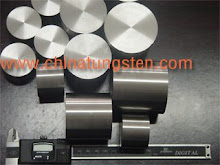
Tungsten Heavy Alloys (WHAs). These are a category of tungsten alloy that typically contain 90 to 98 wt% W. Most commercial tungsten heavy alloys are two-phase structures, the principal phase being nearly pure tungsten in association with a binder phase containing the transition metals plus dissolved tungsten. As a consequence, tungsten alloy (WHAs) derives their fundamental properties from those of the principal tungsten phase, which provides for both high density and high elastic stiffness. It is these two properties that give rise to must applications for this family of materials.
The current uses of tungsten alloy (WHAs) are spanning a wide range of consumer, industrial, and government applications that include:
Damping weights for computer disk drive heads
Balancing weights for ailerons in commercial aircraft, helicopter rotors, and for guided missiles
Kinetic energy penetrators for defeating heavy armor
Fragmentation warheads
Radiation shielding, radio isotope containers and collimation apertures for cancer therapy devices
High performance lead-free shot for waterfowl hunting
Gyroscope components
Weight distribution adjustment in sailboats and race cars.
Many applications that require high gravimetric density for balance weights, inertial masses, or kinetic energy penetrators or high radiographic density for radiation shielding and collimation necessitate rather large bulk shapes. Such a requirement eliminates all but a few candidates on the basis of prohibitive cost, typically reducing the choice of very dense alloys down to either tungsten- or uranium-base materials.
Tungsten heavy alloys typically consist of 90 to 98 wt% W in combination with some mix of nickel, iron, copper, and/or cobalt. The bulk of tungsten alloy production falls into the 90 to 95% W range.
The choice of tungsten alloy composition is driven by several considerations. The primary factor is the density required by the given application. Further considerations include corrosion resistance, magnetic character, mechanical properties, and post sinter heat treatment options.
The first tungsten heavy alloy developed was a W-Ni-Cu alloy. Alloys of this ternary system are still occasionally used today, primarily for applications in which ferromagnetic character and electrical properties must be minimized. W-Ni-Cu alloys otherwise offer inferior corrosion resistance and lower mechanical properties than the present industry standard W-Ni-Fe alloys.
The majority of current uses for tungsten heavy alloys are best satisfied with the W-Ni-Fe system. Alloys such as 93W-4.9Ni-2.lFe and 95W-4Ni-lFe represent common compositions. The addition of cobalt to a W-Ni-Fe alloy is a common approach for slight enhancement of both strength and ductility. The presence of cobalt within the alloy provides solid-solution strengthening of the binder and slightly enhanced tungsten-matrix interfacial strength. Cobalt additions of 5 to 15% of the nominal binder weight fraction arc most common.
For extremely demanding applications, even higher mechanical properties are obtainable from the W-Ni-Co system with nickel-to-cobalt ratios ranging from 2 to 9. Such alloys require resolution/quench, however, due to extensive intermetallic (Co3W and others) formation on cool down from sintering.
A number of special tungsten alloys are known as well. An example is the W-Mo-Ni-Fe quaternary alloy, which utilizes molybdenum to restrict tungsten dissolution and spheroid growth, resulting in higher strengths (but reduced ductility) in the as-sintered slate.
There are also a number of tungsten alloy systems in various stages of development for kinetic energy penetrators that are intended to provide a tungsten heavy alloy that will undergo high deformation rate failure by shear localization in a manner similar to quenched and aged U-0.75Ti for more efficient armor defeat. These alloys to date have not exhibited a property set of interest for industrial applications, however.
Tungsten Alloy Code: GMW
Density: (17-18.5) g/cm3
Main Component: W(88-98)% with the addition of nickel and copper or nickel and iron, etc.
Tungsten Alloy Main Application: For making rotors of dynamic intertial materials, the stabilizers of aircraft wings, shielding materials for radioactive materials, containers in hospitals and for radioactive isotope (Cobalt 60), and for material of armor piercing bullets and moulds, etc.
Tungsten Alloy Advantages:
-High density
-Excellent mechanical properties such as high vibration-damping capacity and high Young's modulus.
-Excellent radiation-shielding property
-High thermal conductivity with low thermal expansion coefficient
-Higher high-temperature strength and thermal shock resistance
-High oxidation resistance and corrosion resistance
The Typical Tungsten Heavy Alloy of Chinatungsten Online:
Code
Densityg/cm3 TRSN/mm2 Elongation % Elastic modulus Kgf/mm2 Hardness HRC GMW
17-18.5 650-950 3-10 2800-3300 25-31
Tungsten Alloy illustrates the advantages of microencapsulated powders. A brief background of this alloy system follows.
Tungsten Alloy generally is two-phase composite consisting of W-Ni- Fe or W-Ni- Cu or even W-Ni-Cu-Fe. Tungsten content in conventional heavy alloys varies from 90 to 98 weight percent and is the reason for their high density (between 17 and 18.6 g/cc). Nickel, iron and copper serve as a binder matrix, which holds the brittle tungsten grains together and which makes the alloys ductile and easy to machine. Nickel-iron is the most popular additive, in a ratio of 7Ni:3Fe or 8Ni:2Fe (weight ratio). The conventional processing route for tungsten heavy alloys includes mixing the desired amount of elemental powders, followed by cold pressing and liquid phase sintering to almost full density. The matrix alloy melts and takes some tungsten into solution during liquid phase processing, resulting in a microstructure through which large tungsten grains (20-60um) are dispersed in the matrix alloy.
The as-sintered material often is subjected to thermo mechanical processing by swaging and aging, which results in increased strength and hardness in the heavy alloys.
Conventional heavy tungsten alloy exhibits a unique property combination. Properly processed materials show a combination of high density, high strength, high ductility, good corrosion resistance, high radiation adsorption capability, and reasonably high toughness. This property combination has made this alloy a candidate for defense and civilian applications. Some of these applications include X-ray and γ-radiation shields, counter weights, defense purposes of kinetic energy penetrators, vibration dampening devices, medical devices for radioactive isotope containment, heavy-duty electrical contact materials, balancing crankshafts for racing car engines, and gyroscopes.
Foe more details, please visit www.chinatungsten.com, or contact at sales@chinatungsten.com


Subscribe to:
Post Comments (Atom)
No comments:
Post a Comment